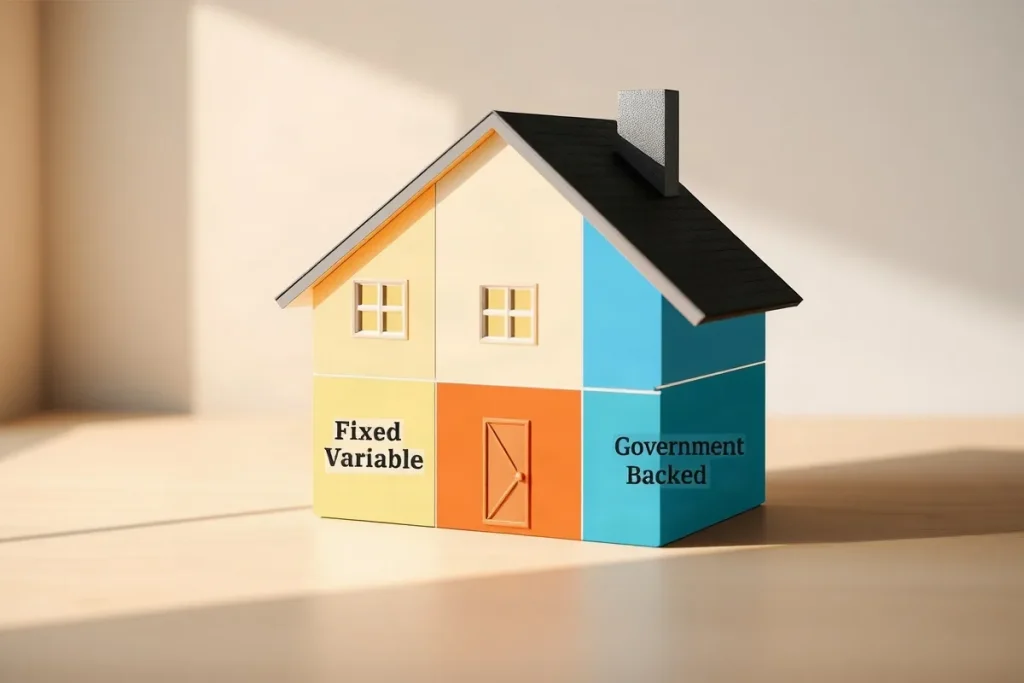
Introduction: Choosing the Right Mortgage Type in 2026
In 2026, understanding the nuances between fixed, variable, and alternative mortgage types is crucial for homebuyers and property investors. The core question is: which mortgage type aligns best with your financial goals and risk tolerance? Fixed-rate mortgages offer stability with current average interest rates around 6.5% in the US, while variable-rate mortgages fluctuate with benchmarks like the Federal Reserve’s target rate, currently at 5.25%. Beyond these, hybrid options and newer mortgage products present tailored solutions for diverse borrower profiles.
Fixed-Rate Mortgages: Stability and Predictability
Fixed-rate mortgages lock in the interest rate for the entire loan term, providing certainty over monthly payments. In 2026, typical fixed rates for 30-year loans hover near 6.5%, according to Freddie Mac’s Primary Mortgage Market Survey. This stability suits borrowers prioritizing budget consistency.
Key Features and Benefits
- Interest rates fixed for terms of 15, 20, or 30 years
- Monthly principal and interest payments remain unchanged
- Ideal for long-term homeowners or those on fixed incomes
For example, Wells Fargo offers 30-year fixed mortgages at 6.55% APR with a minimum down payment of 3%, while Chase Bank’s comparable product features a 6.48% APR with flexible prepayment options.
| Lender | Term | Interest Rate (APR) | Min Down Payment | Prepayment Penalty |
|---|---|---|---|---|
| Wells Fargo | 30 years | 6.55% | 3% | No |
| Chase Bank | 30 years | 6.48% | 5% | No |
| Bank of America | 15 years | 5.95% | 10% | Yes, within first 3 years |
- 6.5% average 30-year fixed mortgage rate in the US (2026)
- 3% typical minimum down payment for fixed loans
- 15 to 30 years common fixed mortgage term lengths
Fixed-rate mortgages provide peace of mind but may come with slightly higher initial rates compared to variable loans. Borrowers expecting stable or rising interest rates often benefit most here.
Variable-Rate Mortgages: Flexibility and Risk
Variable or adjustable-rate mortgages (ARMs) start with a lower introductory rate, such as 5.5% for the first year, then adjust periodically based on indices like the 1-year LIBOR or the Secured Overnight Financing Rate (SOFR). In 2026, ARMs typically feature adjustment caps of 2% annually and lifetime caps of 6%, limiting exposure.
Pros and Cons of Variable Rates
- Lower initial interest rates than fixed mortgages
- Potential savings if benchmark rates decrease
- Risk of payment increases if rates rise
- Adjustment periods commonly every 6 or 12 months
For instance, US Bank offers a 5/1 ARM with a 5.48% initial rate fixed for five years, then adjusting annually with a 2% cap per adjustment and 6% lifetime cap. Borrowers planning to sell or refinance before adjustment periods may benefit.
| Lender | Initial Rate | Fixed Period | Adjustment Frequency | Rate Caps |
|---|---|---|---|---|
| US Bank | 5.48% | 5 years | Annually | 2% annual, 6% lifetime |
| PNC Bank | 5.55% | 3 years | Every 6 months | 1.5% annual, 5% lifetime |
- 5.48% initial ARM rate at US Bank (2026)
- 2% maximum annual rate increase cap on many ARMs
- 5 to 7 years common fixed-rate introductory periods
Variable-rate mortgages suit borrowers with a higher risk tolerance who expect rates to remain stable or decline, or those with short-term homeownership plans.
Hybrid and Interest-Only Mortgages: Specialized Solutions
Hybrid mortgages combine fixed and variable features, while interest-only loans offer initial payment relief but require principal repayment later.
Hybrid Mortgages
Commonly structured as 5/5 or 7/1 hybrids, these loans fix rates for an initial period—5 or 7 years—then adjust periodically. For example, Citibank’s 7/1 hybrid offers a 5.60% fixed rate for seven years, then adjusts annually based on SOFR plus a margin of 2.5%.
Interest-Only Mortgages
These allow borrowers to pay only interest, typically for 5 to 10 years, before principal amortization begins. This reduces early monthly payments to around $1,500 on a $300,000 loan at 6%, versus $1,800 for a fully amortizing loan. However, the eventual principal repayment can spike payments substantially.
- Hybrid mortgages: fixed initial rate + variable adjustments
- Interest-only mortgages: lower initial payments, higher risk later
- Often used by investors or borrowers with fluctuating incomes
| Type | Lender | Initial Rate | Term | Special Features |
|---|---|---|---|---|
| Hybrid 7/1 | Citibank | 5.60% | 30 years | Fixed 7 years, then annual adjustment |
| Interest-Only | Flagstar Bank | 6.00% | 10 years interest-only, then amortizing | Lower initial payments, payment shock risk |
- 7 years fixed period in typical 7/1 hybrid loans
- 10 years common interest-only payment period
- $300,000 loan example for payment comparison
Government-Backed Mortgages: FHA, VA, and USDA Options
For many borrowers, government-insured loans provide competitive rates and lower down payment requirements. In 2026, FHA loans offer rates approximately 6.2% with a minimum 3.5% down payment. VA loans, exclusive to veterans, often provide rates near 5.9% with zero down payment.
Loan Types and Eligibility
- FHA Loans: Backed by the Federal Housing Administration, suitable for first-time buyers or those with weaker credit (minimum FICO around 580)
- VA Loans: For qualified veterans and service members, no PMI required, limits on closing costs
- USDA Loans: For rural properties, zero down payment, income limits typically below $115,000
The Department of Housing and Urban Development (HUD) reports FHA loan limits up to $472,030 in most counties in 2026, making them viable for mid-price homes.
| Loan Type | Typical Rate | Down Payment | Credit Score Minimum | Max Loan Limit |
|---|---|---|---|---|
| FHA | 6.2% | 3.5% | 580 | $472,030 |
| VA | 5.9% | 0% | 620 | $647,200 |
| USDA | 6.0% | 0% | 640 | Varies by location |
- 3.5% minimum down payment for FHA loans
- Zero down payment for VA and USDA loans
- 580-640 minimum credit scores depending on loan type
When to Choose Each Mortgage Type
Deciding which mortgage to select depends heavily on your financial situation and plans. Fixed-rate mortgages suit long-term homeowners valuing payment certainty. Variable-rate loans appeal to those expecting falling rates or planning to move in 5–7 years.
Hybrid loans offer a blend of security and rate flexibility, ideal for borrowers anticipating income growth. Interest-only loans can benefit investors needing cash flow flexibility but come with risks of payment spikes.
Government-backed loans are often best for buyers with lower credit scores or limited down payments.
- Fixed-rate: Best for long-term stability
- Variable-rate: Suits short-term homeowners or rate risk takers
- Hybrid: Good for medium-term plans with some risk tolerance
- Interest-only: Appropriate for investors with strong financial buffers
- Government-backed: Optimal for first-time buyers or low down payment needs
Frequently asked questions
What is the typical duration of a fixed-rate mortgage?
How often do variable mortgage rates adjust?
Are interest-only mortgages riskier than traditional loans?
Can I refinance if I have a variable-rate mortgage?
Who qualifies for a VA loan?
Key takeaways
- Fixed-rate mortgages offer payment predictability with average 30-year rates around 6.5% in 2026.
- Variable-rate mortgages start lower but carry risks tied to benchmark rate fluctuations.
- Hybrid and interest-only loans provide tailored options but require careful risk assessment.
- Government-backed loans reduce down payment burdens and serve buyers with varying credit profiles.
- Your mortgage choice should align with your financial stability, homeownership timeline, and risk tolerance.
Conclusion
The mortgage landscape in 2026 offers diverse products to accommodate different borrower needs and market conditions. By weighing the detailed features, costs, and risks of fixed, variable, hybrid, interest-only, and government-backed loans, borrowers can make informed decisions that optimize their financial well-being. Engage with lenders like Wells Fargo, US Bank, or government agencies to explore current rates and terms tailored to your situation. Ultimately, decoding mortgage types empowers smarter borrowing and successful homeownership.

Topic guide: Analysis: The Complete Guide