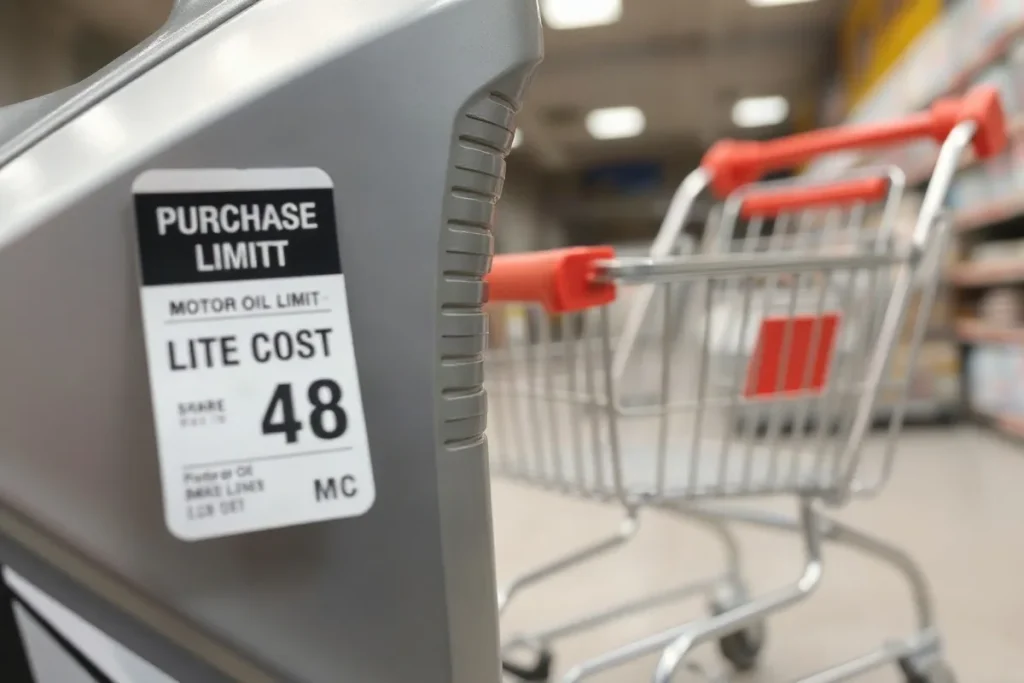
Costco’s Motor Oil Price Hike and Rationing
Costco has increased the price of its Kirkland Signature full-synthetic motor oil to $57.99 for a 10-quart case, nearly doubling the previous $30 price point. Additionally, the retailer now limits purchases to two units per member each week. The move also affects Mobil 1 motor oil, which is capped at five units per customer, with six quarts priced at $44.
These changes are significant for Costco members who rely on affordable, bulk motor oil for routine vehicle maintenance. The price surge and rationing mark a departure from previous years and reflect broader supply challenges in the motor oil market.
Global Lubricant Shortage and Oil Market Pressures
The price increase and rationing stem largely from a global lubricant shortage linked to geopolitical tensions in the Middle East and soaring crude oil prices near $100 per barrel. The International Energy Agency (IEA) lowered its 2026 global oil supply forecast to 102 million barrels per day in August, projecting a 1.8 million barrel daily deficit in Q3—more than double prior estimates.
This supply crunch has resulted in over 500 million barrels drawn from global inventories since the onset of the U.S.-Iran conflict. Chevron CEO Mike Wirth noted that the strategic reserves cushioning price spikes have been depleted. Meanwhile, U.S. diesel prices reached $6.06 per gallon, a record high and a clear indicator of tight fuel markets.
Refinery Economics and Base Oil Availability
At the refinery level, base oil used for lubricants shares its crude oil origin with gasoline and diesel. When refining margins on fuels increase, producers prioritize these higher-margin products over lubricant stocks. EIA data shows the gasoline crack spread is about $1 per gallon higher than in the same period of 2025, reducing base oil availability and pushing lubricant prices upward.
This dynamic pressures motor oil supply chains, contributing directly to the scarcity and price increases consumers now face at major retailers like Costco. The refinery economics thus play a pivotal role in the consumer cost environment for automotive essentials.
Certification Costs and Industry Standards Driving Prices
Kirkland motor oil carries GM’s dexos1 Gen 3 certification, which adds regulatory and licensing expenses. Each product must pass GM’s independent testing and obtain a license, with fees applied per product and per unit sold. These compliance costs increase the base price of the oil.
Furthermore, the API SP engine oil standard introduced in 2020 requires seven additional laboratory tests, including checks for low-speed pre-ignition, a concern in modern turbocharged engines. These stringent testing requirements add complexity and cost to motor oil production, affecting retail prices.
Impact on Consumers and DIY Oil Changes
The price surge and purchasing limits affect not only retail customers but also those who perform their own vehicle maintenance. At current Kirkland prices, a DIY oil change costs roughly the same as having it done at an independent shop, eliminating a key financial incentive to self-service.
This shift could influence consumer spending patterns, potentially increasing demand for professional automotive services despite rising fuel and lubricant costs. The cost management challenges faced by drivers highlight broader inflationary pressures in essential automotive products.
Takeaway: Costco’s motor oil price jump and rationing reflect tightening global supplies and rising production costs, reshaping consumer spending on automotive essentials.
