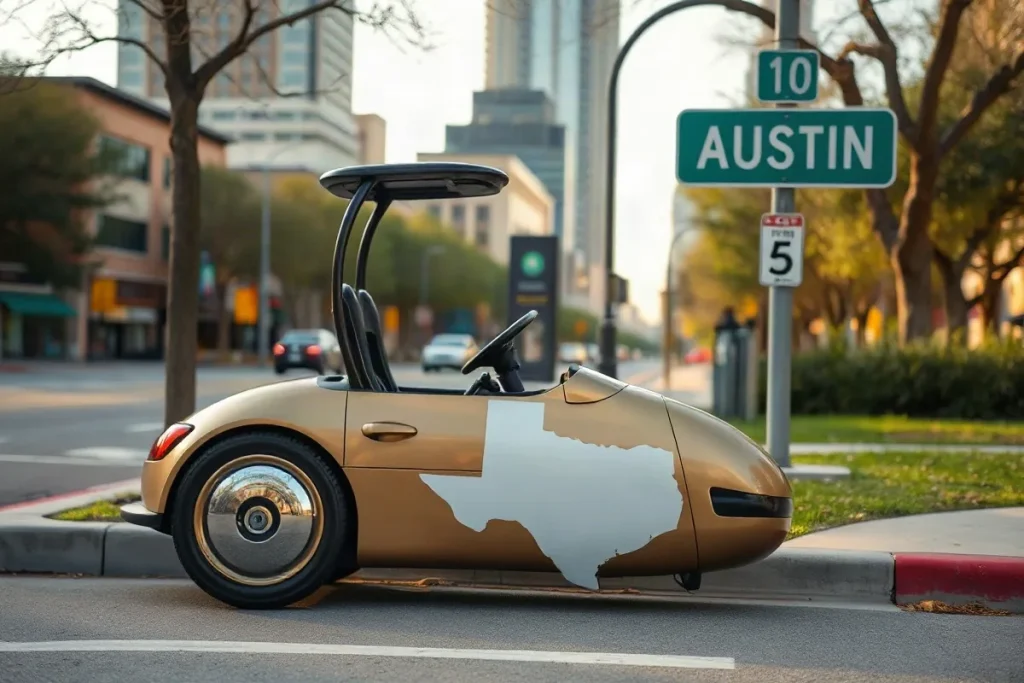
Tesla’s Cybercab fleet authorized for commercial use in Texas grew from 45 vehicles at its Austin unveiling to 169 by Friday, but the driverless ride-hailing service still operates only in Austin. Its first month, following a Sept. 3 launch, brought passenger complaints about long waits, misplaced pickups and drop-offs, and vehicle glitches. Tesla now faces the harder test: improving the service while securing permission to expand beyond Texas.
A bigger fleet, but still one city
The increase from 45 to 169 Cybercabs in Texas is a substantial early expansion of Tesla’s dedicated two-seat, driverless vehicle fleet. Yet authorization across the state has not translated into service across multiple cities: Austin remains the only place where Tesla operates Cybercab as part of its robotaxi service.
Tesla’s Texas robotaxi operation also includes 420 Model Y vehicles equipped with its automated-driving systems, which are not yet available to individual car buyers. Austin has attracted several autonomous-vehicle operators, including Amazon’s Zoox, and its comparatively permissive state rules and tech community make it an early proving ground. But scaling in that market is different from winning approval elsewhere.
Passenger experience is the immediate hurdle
Cybercab’s first riders have reported lengthy waits, pickups and drop-offs at incorrect locations, and technical trouble with butterfly doors and trunks. The vehicle’s unusual design—without a steering wheel, pedals, rear or sideview mirrors, or exterior door handles—sets it apart, but also makes practical details such as entering and leaving part of the service’s early test.
Austin resident Ethan McKanna, who has taken about 30 Cybercab rides, described the ride as smooth and praised the space, screen and media controls. He also said the pickup and drop-off process needed work; in the launch period, waits were often 45 minutes or longer, though he said they had eased as demand became more balanced. Those experiences put a concrete measure on the gap between adding vehicles and delivering a dependable ride.
Waymo sets a larger Texas benchmark
Tesla is expanding into a market where Waymo already has a larger authorized fleet. As of Friday, 1,154 Waymo autonomous vehicles were authorized for commercial use in Texas, including 359 Ojai models. The comparison is not a direct measure of service quality, but it shows the scale of the incumbent’s local operating base.
Waymo’s broader footprint adds pressure: the company is operating in 15 U.S. markets, with 15 more on its horizon, and has announced plans for London, Tokyo and Munich. Its established operations underline that Tesla’s challenge is not simply to put more Cybercabs on Austin roads. It must make the service work consistently and repeat that performance in new places.
Safety oversight could shape expansion
The National Highway Traffic Safety Administration opened an audit query after the Cybercab launch to check whether the vehicles comply with federal safety standards. The agency initially sought Tesla’s response by Sept. 30, but an NHTSA spokesperson said the company received an extension. That review is a separate hurdle from obtaining local permission to operate in additional markets.
First responders have also raised concerns about handling a vehicle without manual driving controls. Austin Fire Captain Matt McElearney said Tesla had provided emergency instructions and training, but argued that autonomous vehicles should offer public-safety officials a way to take control, move, steer or shut them down. He also called for testing throughout a vehicle’s lifespan, since software changes or bugs can affect performance.
Investor hopes depend on execution
Robotaxis matter to Tesla as its core automotive business faces pressure: the source material describes consecutive annual declines in automotive revenue and competition from more affordable models by Chinese electric-vehicle makers BYD and Xiaomi. Tesla shares were down 18% for the year covered in the report, even though better-than-expected third-quarter deliveries lifted the stock almost 5% on Friday. Deliveries still fell 2% year over year.
Tesla has set an ambition for widespread U.S. deployment by the end of 2026, but reaching markets beyond Texas requires permits, including in California, as well as progress on service quality and safety review. The Austin launch has produced a larger authorized fleet; it has not yet shown that the company can expand smoothly across jurisdictions or match more mature operations.
Takeaway: Tesla has nearly quadrupled its authorized Cybercab fleet in Texas, but Austin remains the only operating market—and expansion will depend on fixing service problems and clearing regulatory hurdles.
References
- Superpower Daily — “Tesla Grows Its Authorized Cybercab Fleet to 169, but Service Remains Austin-Only”
- stockanalysis.com — “All Stock News”
- cnbc.com — “United States”
- BigGo Finance — “Jason Calacanis on the Robotaxi Endgame|Road to Autonomy”
