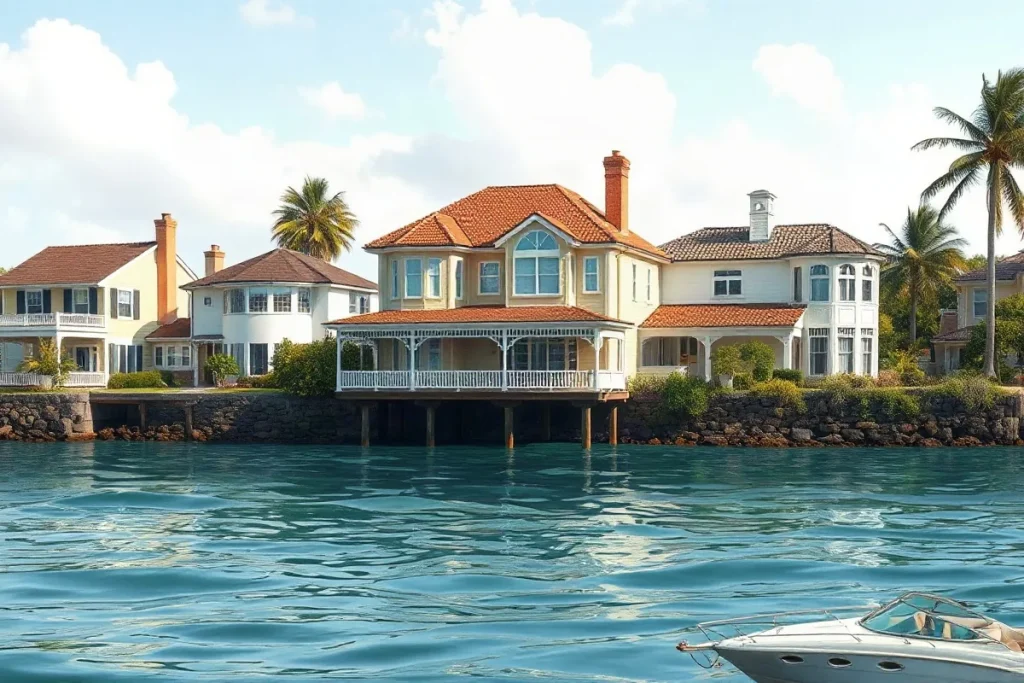
Recent research from the Yale School of Management has brought new insights into the relationship between climate change and coastal property values, revealing that rising sea levels may not be the primary factor driving declines in these markets. The study suggests that skepticism about climate change risks may actually lead to higher property prices in coastal areas, challenging long-held beliefs about the direct impact of environmental changes on real estate valuations.
This research is especially relevant as communities along coastlines grapple with the implications of climate change, such as rising sea levels and increased storm frequency. Understanding the dynamics of property values in this context is crucial for homeowners, investors, and policymakers who are making decisions about future development and investment in vulnerable areas.
The Role of Buyer Perception
The recent findings indicate that buyer perceptions significantly influence coastal property values. Many buyers remain skeptical about the long-term risks associated with climate change, which can lead them to overlook potential hazards when purchasing real estate in coastal regions. This phenomenon may result in inflated prices, as buyers prioritize location and aesthetic appeal over risk assessment.
According to the study, beliefs about climate change risk can create a dichotomy in how properties are valued. While some buyers may factor in potential future risks and price properties lower, others may disregard these concerns entirely, pushing values higher. This divergence in buyer attitudes can lead to market inefficiencies, where property prices do not accurately reflect underlying risks.
Impact of Adaptation Measures
Adaptation measures, such as the restoration of mangroves and other natural barriers, have emerged as significant factors that can influence coastal property values. These measures not only provide ecological benefits but also serve as indicators of a community’s resilience to climate-related threats. Properties in areas where such measures are implemented may see their values stabilize or even increase due to enhanced perceptions of safety.
Market Dynamics and Future Projections
Despite the current buoyancy in coastal property markets, experts warn that this trend may not be sustainable in the face of ongoing climate change. As scientific consensus grows regarding the long-term effects of rising sea levels and extreme weather events, there is potential for a shift in buyer sentiment. If climate change skepticism diminishes, property values could face downward pressure as buyers reassess risks.
Furthermore, as adaptation measures become more commonplace, the market may begin to differentiate between properties based on their resilience to climate impacts. This could lead to a new valuation paradigm where properties with robust adaptation strategies command higher prices, while those lacking such features could see declines. The interplay of perception, policy, and environmental realities is likely to create a complex landscape for coastal real estate moving forward.
Broader Implications for Investors
The findings from this study carry significant implications for investors in coastal property markets. Recognizing that climate change may not immediately impact property values allows for a more nuanced approach to investment strategies. Investors can focus on areas with strong local governance and proactive adaptation measures, potentially reaping long-term benefits even amidst growing climate concerns.
Additionally, understanding the psychological factors driving buyer behavior can help investors tailor their marketing strategies and property offerings. By emphasizing resilience and sustainability, investors can position their properties favorably in a market that may evolve as public perception shifts regarding climate risks.
In conclusion, the interplay between climate change, market perception, and property values in coastal areas is complex and evolving. Stakeholders must remain vigilant and adapt their strategies to navigate this changing landscape effectively.
Sources
Yale Insights, justintyndall.com, uhero.hawaii.edu, link.springer.com, nber.org

Topic guide: Analysis: The Complete Guide