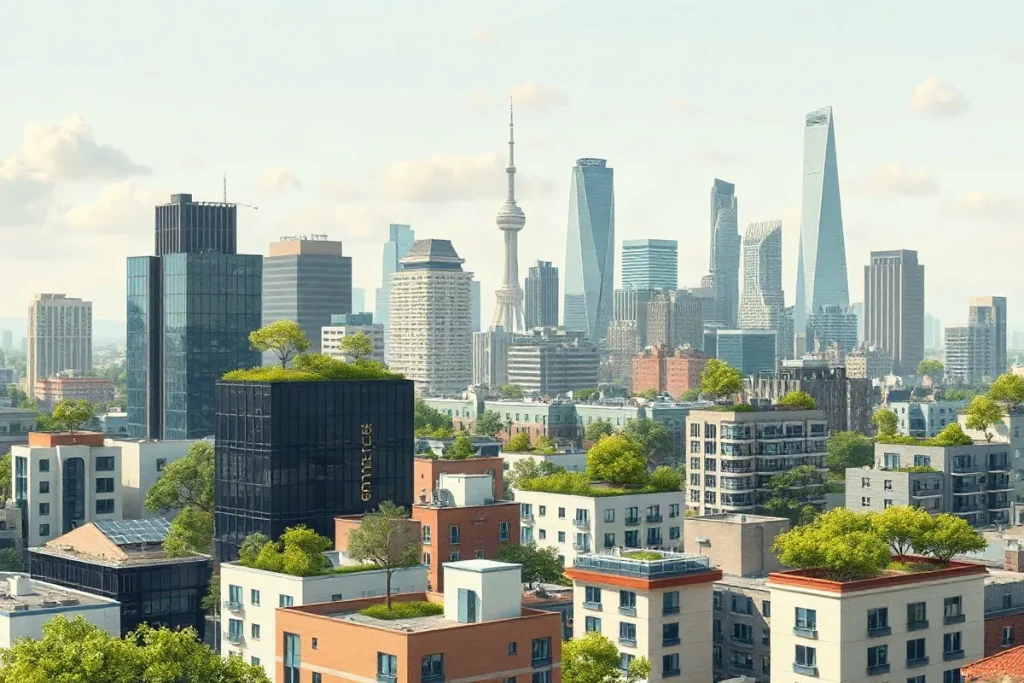
Significant Shift Towards Sustainability
As of August 2026, urban property development is undergoing a transformative shift towards integrating eco-friendly solutions, driven by increasing regulatory pressures and market demand. A recent report from the International Finance Corporation (IFC) indicated that 52% of new developments in leading cities are now prioritizing sustainability, reflecting a growing recognition of the need for environmentally responsible construction.
Key players in the sector, such as Green Building Council and major developers like Skanska, are taking action by adopting guidelines that align with the Global Sustainability Standards set to come into force in 2027, which mandate stricter energy efficiency requirements. The urgency of these changes is underscored by the fact that urban areas contribute to 70% of global CO2 emissions, necessitating immediate action from the property sector.
Rising Demand for Green Building Materials
The demand for eco-friendly building materials is surging, with a notable increase in the use of recycled and sustainably sourced materials. In 2026, the market for green building materials is projected to reach approximately $355 billion, up from $260 billion in 2022, according to a study by Research and Markets. This increase is fueled by a combination of consumer preferences and stricter building codes.
Manufacturers like Kingspan and BASF are responding to this demand by innovating products that meet LEED (Leadership in Energy and Environmental Design) certification standards. For instance, Kingspan’s new insulation products, which boast a 30% reduction in embodied carbon, are being adopted widely in urban projects across Europe and North America.
Government Incentives and Legislation
Various governments worldwide are implementing incentives to encourage sustainable development. In the U.S., the Inflation Reduction Act of 2022 allocated $370 billion towards clean energy initiatives, which includes tax credits for sustainable building practices. As a result, developers are increasingly investing in projects that qualify for these financial benefits, which can cover up to 30% of renewable energy installation costs.
In addition, cities like San Francisco and New York have introduced legislation requiring new buildings to achieve a minimum sustainability score, thus pushing developers to comply with eco-friendly standards. By 2026, San Francisco aims to have 100% of new constructions meeting its Green Building Ordinance requirements, which include energy efficiency, water conservation, and material sourcing.
Impact on Property Values
The integration of sustainable practices in urban property development is influencing property values. A study by the National Association of Realtors revealed that homes built with green certifications sell for an average of 10% more than traditional homes. This trend is particularly evident in metropolitan areas where eco-friendly buildings are becoming a selling point in the housing market.
In cities like Seattle and Portland, properties with green certifications saw a price increase of 15% over the last five years, showcasing the financial benefits of sustainable building. As buyers become more environmentally conscious, developers are likely to prioritize these features to remain competitive, further driving up demand and property values.
Community and Economic Benefits
Sustainable urban development is not only beneficial for the environment but also for local communities and economies. By investing in green infrastructure, cities can expect to see a reduction in energy costs and improved public health outcomes. For instance, the implementation of green roofs and urban gardens can lower city temperatures by up to 5 degrees Celsius, contributing to better living conditions.
Moreover, a report by the World Green Building Council estimated that sustainable building practices could create over 1.5 million jobs globally by 2030. This job creation is vital for urban areas grappling with unemployment and is likely to foster community engagement and economic revitalization, ultimately benefiting residents and local businesses.
Takeaway: The 2026 focus on eco-friendly solutions in urban property development marks a pivotal moment, emphasizing sustainability as a cornerstone of future construction practices.

Topic guide: Analysis: The Complete Guide