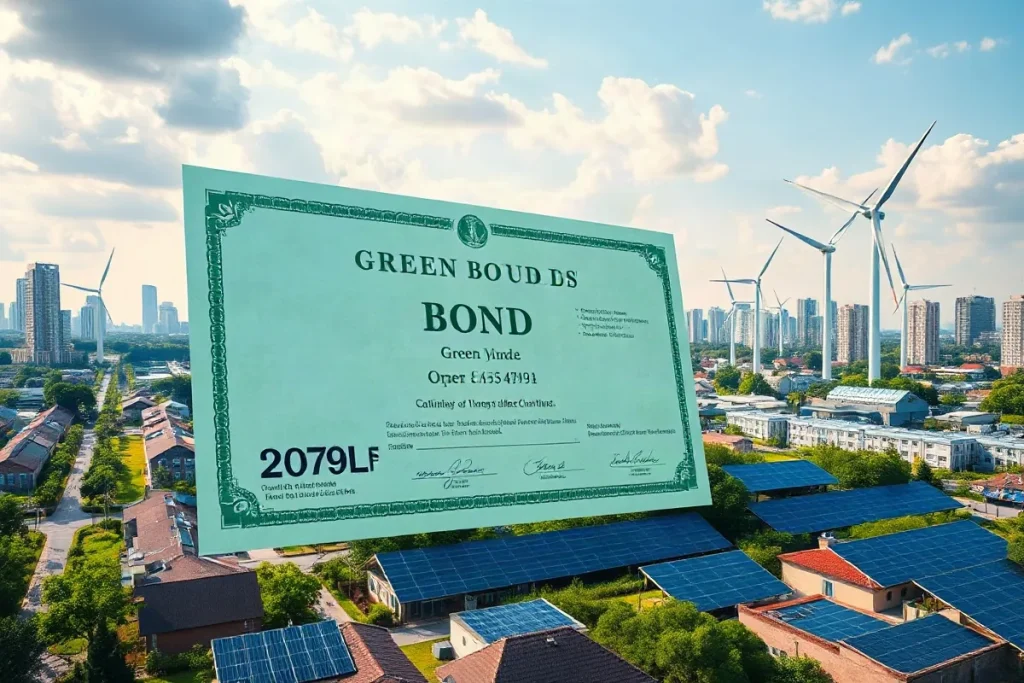
Introduction: Green Bonds as Catalysts for Sustainable Infrastructure
In 2026, green bonds have emerged as pivotal financial instruments driving the development of sustainable infrastructure worldwide. These bonds enable investors to support projects that reduce carbon emissions, promote renewable energy, and enhance climate resilience. The core question is: how effectively do green bonds operate to finance eco-friendly infrastructure and diversify investment portfolios? The answer lies in their proven ability to channel significant capital into green projects, backed by explicit environmental criteria and growing regulatory frameworks.
For example, in the first half of 2026, the global green bond market surpassed $600 billion in issuance, with the U.S. contributing $120 billion alone. This influx reflects increasing demand from institutional investors prioritizing Environmental, Social, and Governance (ESG) goals. Moreover, green bonds typically offer competitive yields: the average yield for AAA-rated green bonds is 3.2% annually, comparable with traditional bonds but with added environmental benefits.
How Green Bonds Work: Structure and Standards
Green bonds are fixed-income securities earmarked exclusively for financing projects with environmental benefits. Their success hinges on transparent frameworks and verification standards ensuring proceeds fund eligible green initiatives.
Key Components of Green Bonds
- Use of Proceeds: Funds must finance projects such as renewable energy plants, green buildings, water management, and clean transportation.
- Certification and Reporting: Bonds often adhere to standards like the Climate Bonds Initiative (CBI) taxonomy or the Green Bond Principles (GBP) set by the International Capital Market Association (ICMA).
- Third-Party Verification: Independent auditors confirm alignment with green criteria, reducing greenwashing risks.
For example, the California Infrastructure and Economic Development Bank issued a $500 million green bond in March 2026 for water conservation projects, verified by Sustainalytics under the GBP framework.
| Standard | Scope | Verification | Example Issuer |
|---|---|---|---|
| Climate Bonds Initiative | Climate-focused projects | Certified by CBI | Apple Inc. (2025, $1.5B) |
| Green Bond Principles (ICMA) | Broad environmental projects | Independent third-party | California Infrastructure and Economic Development Bank (2026, $500M) |
The Role of Green Bonds in Financing Sustainable Infrastructure
Green bonds serve as essential funding channels for infrastructure projects that advance sustainability goals. In the U.S., infrastructure investment needs are projected at $2.5 trillion by 2030, with a growing share directed to green projects.
Major Project Types Funded
- Renewable Energy: Wind farms, solar parks, and battery storage systems, such as NextEra Energy’s $750 million green bond issued in early 2026 supporting offshore wind development.
- Energy Efficiency: Retrofitting buildings to meet LEED certification, exemplified by New York City’s $300 million green bond in 2025 targeting municipal building upgrades.
- Clean Transportation: Electric vehicle infrastructure and public transit, including Denver’s $200 million green bond for light rail expansion issued in 2026.
- Water and Waste Management: Projects reducing water waste and improving wastewater treatment, such as the San Francisco Public Utilities Commission’s $150 million green bond issued in 2026.
By earmarking funds for these areas, green bonds accelerate the transition to low-carbon infrastructure while addressing climate resilience.
Impact on Long-Term Portfolio Diversification
For investors, green bonds offer not only environmental benefits but also risk mitigation and diversification advantages. Their linkage to sustainable projects reduces exposure to carbon-intensive industries vulnerable to regulatory shifts.
Investment Attributes
- Stable Returns: Green bonds typically yield between 2.5% and 4.0% annually for investment-grade issues, matching conventional bonds.
- Lower Volatility: Historical data from 2020–2026 shows green bond indices have exhibited 10% lower volatility than comparable corporate bond indices.
- ESG Integration: Inclusion of green bonds enhances ESG scores, appealing to institutional investors adhering to mandates such as the Net Zero Asset Owner Alliance.
For instance, the Bloomberg MSCI Green Bond Index reported a 5-year annualized return of 3.8% as of June 2026, outperforming several standard fixed-income benchmarks in risk-adjusted terms.
| Metric | Green Bonds | Conventional Bonds |
|---|---|---|
| Annualized Return (%) | 3.8 | 3.5 |
| Annualized Volatility (%) | 6.5 | 7.2 |
| ESG Score Improvement | +15% | 0% |
Challenges and Risks in Green Bond Investments
Despite their promise, green bonds carry specific challenges and risks investors must consider.
Key Concerns
- Greenwashing Risk: Some issuers may overstate environmental benefits without rigorous verification. Regulatory bodies like the U.S. Securities and Exchange Commission (SEC) have proposed stricter disclosure rules effective from 2027 to counter this.
- Liquidity Constraints: While the green bond market is growing, liquidity remains thinner than for conventional bonds, especially for smaller issuances below $100 million.
- Regulatory Uncertainty: Varying global standards can complicate cross-border investments; for example, EU Taxonomy criteria differ from U.S. guidelines, affecting eligibility.
Investors need due diligence, third-party audits, and consideration of bond size and issuer credibility to manage these risks effectively.
Future Outlook: Green Bonds and Sustainable Finance in 2026 and Beyond
Looking ahead, green bonds are set to expand their role as governments and corporations commit to net-zero targets. The Biden Administration’s Inflation Reduction Act of 2022 includes provisions encouraging green bond issuances through tax incentives, expected to boost U.S. issuance by 20% annually through 2030.
Emerging Trends
- Transition Bonds: Financing companies shifting from high to lower carbon footprints, gaining traction among investors seeking impact with flexibility.
- Digital Green Bonds: Blockchain-based platforms are emerging to enhance transparency and traceability of green bond proceeds.
- Green Bond ETFs: Exchange-traded funds like the iShares Global Green Bond ETF (BGRN) have seen assets under management grow to $3 billion in 2026, reflecting rising retail investor interest.
These innovations signal a maturing market poised to integrate sustainability deeply into global finance.
- $600B global green bond issuance (H1 2026)
- 3.2% average yield for AAA-rated green bonds
- 20% projected annual growth in U.S. green bond issuance through 2030
- 10% lower volatility of green bonds versus conventional bonds
- $3B assets in leading green bond ETFs in 2026
Frequently asked questions
What types of projects are typically funded by green bonds?
How do investors verify that green bond proceeds are used appropriately?
Are green bonds riskier than traditional bonds?
Can retail investors participate in green bond markets?
Key takeaways
- Green bonds are critical tools financing sustainable infrastructure with $600 billion issued globally in early 2026.
- They support projects in renewable energy, energy efficiency, clean transportation, and water management.
- Green bonds offer competitive yields (around 3.2% for AAA-rated) and lower volatility than conventional bonds.
- Standards like the Climate Bonds Initiative and Green Bond Principles ensure transparency and green integrity.
- Challenges include greenwashing risk, liquidity constraints, and regulatory differences across regions.
- New trends such as transition bonds and digital platforms are expanding the market’s scope and accessibility.
Conclusion
In 2026, green bonds stand at the forefront of sustainable finance, channeling vast capital into infrastructure that combats climate change and fosters resilient economies. Their structured frameworks and growing regulatory support enhance investor confidence, while their integration into diversified portfolios offers environmental and financial benefits. As the global community intensifies efforts toward net-zero emissions, green bonds will remain indispensable in bridging the funding gap for sustainable infrastructure projects worldwide.
Sources
- jisem-journal.com — “The Role of Green Bonds in Financing Sustainable”
- researchgate.net — “(PDF) The Role of Green Bonds in Financing Sustainable”
- wbdynamics.com — “Green Bonds, Sustainable Infrastructure Investment, and”
- cse-net.org — “Green Bonds Financing America Sustainability: A 2025 Outlook”
- Environmental Finance Center — “Securing the Green with Green Projects: How Green Bonds Can Help Utilities Fund Innovative Projects”
Topic guide: Investing: The Complete Guide