Introduction: Are High-Yield Savings Accounts Truly Worth It?
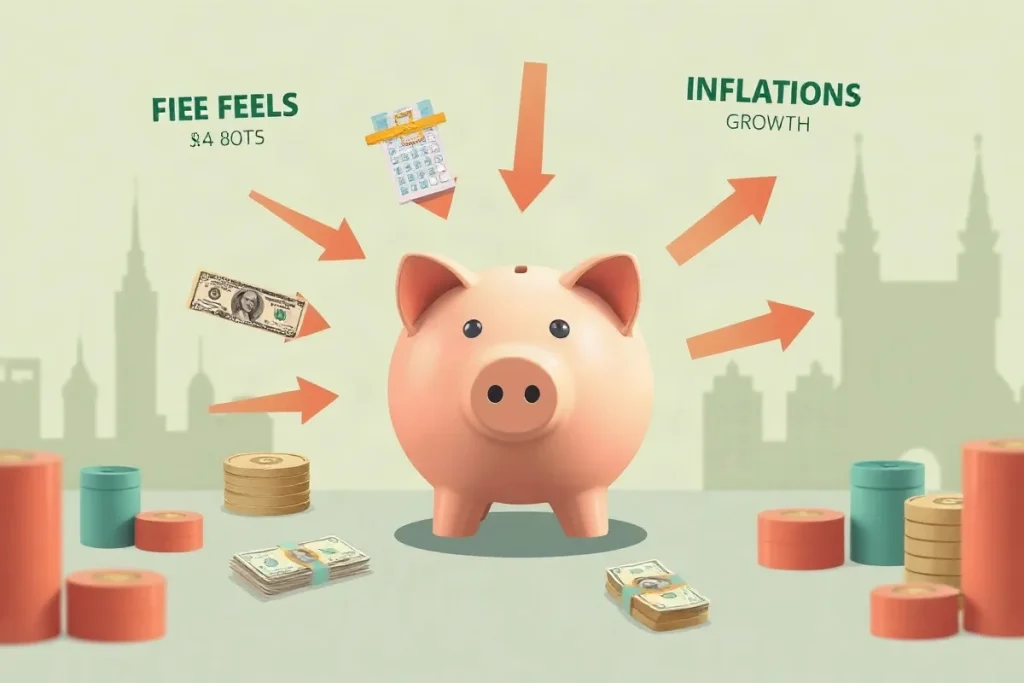
High-yield savings accounts in 2026 often advertise interest rates well above traditional savings options, enticing consumers with the promise of faster growth on their cash reserves. However, beneath these attractive yields lie potential hidden costs—fees, withdrawal penalties, and inflation effects—that may substantially diminish the net benefits over time. Understanding these factors is crucial for anyone looking to optimize their passive income and savings strategy.
Fees: The Silent Drainers of Savings Growth
While some high-yield savings accounts boast no fees, others impose monthly maintenance charges, minimum balance fees, or transaction costs that quietly chip away at interest earnings. For instance, the Consumer Financial Protection Bureau has highlighted that some accounts may feature surprise fees that reduce the overall return, particularly in niche accounts like health savings accounts.
Common Fee Types to Watch For
- Monthly Maintenance Fees: Can range from $5 to $15 per month, depending on the institution.
- Excess Withdrawal Fees: Typically $10 to $15 per transaction exceeding federally mandated limits.
- Minimum Balance Fees: Charged if the account balance falls below thresholds such as $500 or $1,000.
Conversely, some credit unions like HRCCU offer high-yield savings accounts with no annual fees or hidden charges, allowing savers to maximize their interest accrual without deductions.
| Account | Monthly Fee ($) | Minimum Balance ($) | Excess Withdrawal Fee ($) |
|---|---|---|---|
| HRCCU High-Yield Savings | 0 | 0 | 10 |
| BlueTrust Bank | 10 | 1,000 | 15 |
| Capital Advantage | 5 | 500 | 12 |
Withdrawal Penalties: Limiting Your Access and Earnings
Federal regulations still restrict certain types of withdrawals from savings accounts to six per month, but many high-yield accounts impose stricter limits. Exceeding these limits can trigger fees or account reclassification, leading to lower interest rates or conversion to checking accounts.
Withdrawal Terms to Scrutinize
- Transaction Limits: Most high-yield accounts cap withdrawals at six per month.
- Penalty Fees: Can be $10 to $15 per additional withdrawal.
- Account Downgrade: Some banks downgrade the account to a no-interest checking account after repeated excess withdrawals.
For example, BlueTrust Bank charges $15 per excess withdrawal and will downgrade accounts exceeding limits three times in a year. This can significantly erode anticipated gains if not monitored carefully.
Inflation’s Impact: The Eroding Purchasing Power
Even at an annual percentage yield (APY) of 4% or higher, inflation in 2026 remains a critical factor to consider. With the U.S. inflation rate fluctuating around 3% to 4% in recent quarters, the real return on high-yield savings accounts can be minimal or even negative after adjusting for price increases.
Understanding Real Yield
The real yield equals the nominal APY minus the inflation rate. For example, a 4.5% APY with 3.5% inflation yields a real return of just 1%. This means the actual purchasing power of your savings grows very slowly, or potentially declines if inflation spikes.
Investors seeking to outpace inflation may need to consider alternatives like Treasury Inflation-Protected Securities (TIPS) or diversified investment portfolios, as high-yield savings accounts primarily preserve liquidity but do not guarantee strong inflation-beating returns.
Interest Rate Variability: How APYs Can Change
Unlike fixed-term certificates of deposit, high-yield savings accounts usually offer variable interest rates tied to benchmark rates such as the federal funds rate. In 2026, many banks have adjusted APYs downward following recent Federal Reserve rate cuts.
Factors Influencing Rate Changes
- Federal Reserve Policy: Rate hikes or cuts directly impact savings account yields.
- Bank Profit Margins: Institutions may reduce rates to protect margins during economic downturns.
- Competitive Market: Some banks may maintain higher rates to attract deposits, but this often comes with stricter terms.
For example, the APY on HRCCU’s Premier Savings account was 4.2% in January 2026 but declined to 3.75% by September due to Fed policy changes.
Tax Implications: The Effect on Net Earnings
Interest earned on high-yield savings accounts is taxable as ordinary income at the federal and often state levels. This can significantly reduce the net gains, especially for savers in higher tax brackets.
Tax Considerations
- Federal Tax Rate: Ranges from 10% to 37% depending on income.
- State Taxes: Many states also tax interest income, with rates up to 13.3% in California.
- Tax-Advantaged Accounts: Using accounts like IRAs or HSAs can defer or exempt tax on interest.
For a saver earning $500 in interest annually at a 24% federal tax bracket plus a 5% state tax rate, nearly $145 could be lost to taxes, significantly lowering the effective return.
- 4.2% average APY on top high-yield savings accounts (early 2026)
- $10–$15 typical fee per excess withdrawal
- 6 federal transaction withdrawal limit per month
- 3–4% approximate U.S. inflation rate (2026)
- 24% common federal tax bracket impacting interest income
Frequently asked questions
Are all high-yield savings accounts fee-free?
How often can I withdraw from a high-yield savings account without penalty?
Does inflation affect my savings account earnings?
Are the interest rates on high-yield savings accounts fixed?
Is the interest earned on savings accounts taxable?
Key takeaways
- High-yield savings accounts offer attractive nominal interest rates, but fees and penalties can offset gains.
- Withdrawal limits and penalties are common and can reduce account flexibility and earnings.
- Inflation in 2026 remains a significant factor, often diminishing real returns.
- Interest rates are variable and can decline with Federal Reserve monetary policy changes.
- Taxes on interest income further reduce the effective yield from these accounts.
Conclusion
High-yield savings accounts remain a valuable tool for liquidity and passive income, especially for risk-averse savers in 2026. However, their true benefits depend heavily on understanding and managing hidden costs like fees, withdrawal penalties, inflation erosion, rate variability, and tax impacts. Consumers should carefully compare account terms, monitor rate changes, and consider their broader financial goals to ensure these accounts align with their savings strategy. Opting for fee-free options like HRCCU or integrating savings accounts with tax-advantaged vehicles can help maximize returns in an environment where every percentage point matters.
Sources
- fastercapital.com — “Passive income streams: High Yield Savings: The Hidden Gem of Passive Income: High Yield Savings Accounts – FasterCapital”
- HRCCU — “High-Yield Savings with HRCCU”
- Consumer Financial Protection Bureau — “CFPB Highlights the Hidden Costs of Health Savings Accounts”
- nyongesasande.com — “Best High-Yield Savings Accounts in the USA for 2026”
Topic guide: Banking: The Complete Guide