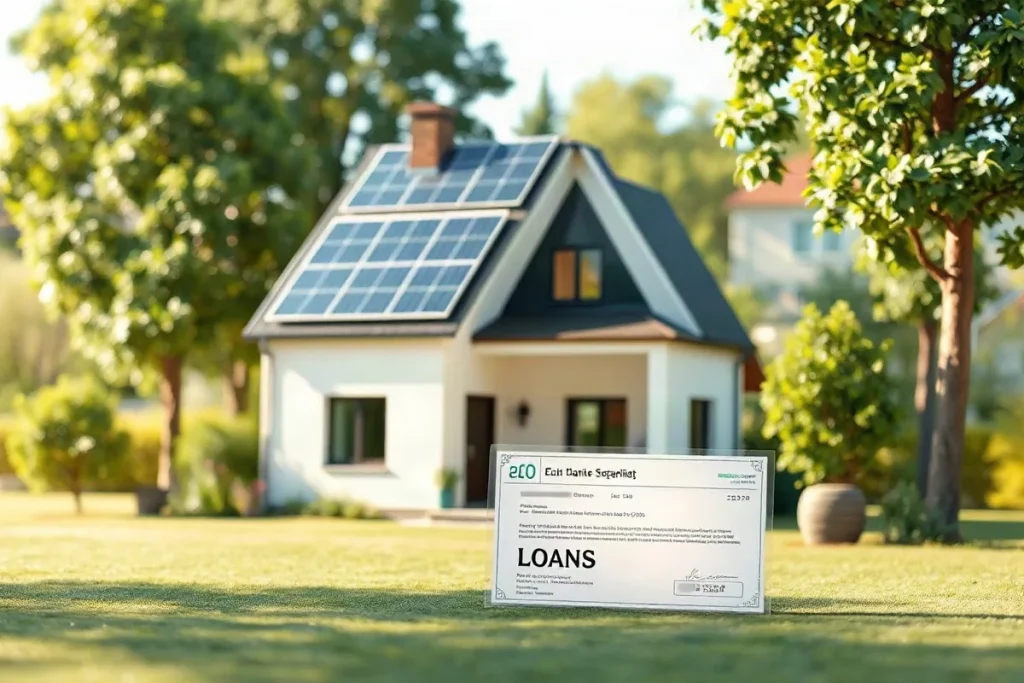
Green mortgages are rapidly gaining traction as a powerful tool to encourage homeowners to invest in energy-efficient home improvements. By offering more favorable loan terms—such as lower interest rates or larger borrowing limits—these specialized mortgages make it financially attractive to upgrade insulation, install solar panels, or replace outdated heating systems. This approach not only helps reduce household energy consumption but also supports broader environmental goals by lowering carbon footprints.
At their core, green mortgages align financial incentives with sustainable living, turning energy efficiency from a costly upgrade into a wise investment. Lenders benefit from the reduced risk associated with homes that have lower utility bills and potentially higher resale values, while borrowers gain long-term savings on energy costs and contribute to a greener future. Understanding how green mortgages work reveals why they are becoming an essential part of the housing market’s shift toward sustainability.
| Program | Max Additional Loan Amount | Eligible Improvements | Key Requirement |
|---|---|---|---|
| FHA Energy Efficient Mortgage | $8,000 | Windows, HVAC, insulation, solar | Minimum credit score 620 |
| Fannie Mae HomeStyle Energy | Up to 15% of home value | Wide range including renewable energy | Energy audit required |
| California GoGreen Home Loan | Varies, zero fees | Energy-efficient upgrades and appliances | Open to renters and homeowners |
| Conventional Green Mortgages (e.g., Wells Fargo) | Varies by lender | ENERGY STAR certified improvements | Proof of savings projections |
- 10-30% Typical reduction in monthly energy bills after upgrades
- $15,000-$30,000 Common range for solar panel system costs financed through green mortgages
- 5-10% Increase in property value linked to ENERGY STAR certified homes
- 620 Common minimum credit score required for green mortgage eligibility
- $8,000 Additional borrowing allowed under FHA Energy Efficient Mortgage program
What is a green mortgage and how does it differ from a conventional mortgage?
Definition and key differences
A green mortgage, also known as an energy-efficient mortgage (EEM), is a home loan that enables borrowers to finance energy-saving upgrades at the same interest rate and terms as their primary mortgage, unlike conventional mortgages which do not specifically account for such improvements. One key distinction is that green mortgages consider projected utility savings—often estimated at 10% to 30% lower energy bills annually—to justify higher loan amounts, facilitating investments in eco-friendly features. For example, the U.S. Environmental Protection Agency (EPA) endorses EEMs that incorporate costs for energy-efficient installations into the loan principal. This contrasts with conventional mortgages, where loan eligibility is primarily based on the property’s current market value and borrower creditworthiness, without factoring in future energy cost reductions.
Eligible improvements
Green mortgages can be used either to purchase homes with existing energy-efficient features or to refinance and fund upgrades that improve a property’s environmental performance. Eligible improvements typically include:
- ENERGY STAR certified appliances such as refrigerators and HVAC systems, which must meet strict energy efficiency standards.
- Installation of solar panels, with costs often ranging from $15,000 to $30,000 depending on system size and location.
- Energy-efficient windows and insulation upgrades, which the EPA recognizes as qualifying expenses under EEM programs.
- Renewable energy systems like geothermal heat pumps or solar water heaters, which contribute to reducing a home’s carbon footprint.
These enhancements are bundled into the mortgage, allowing borrowers to spread out the costs over 15 to 30 years, making sustainable home improvements more affordable and accessible than through conventional financing options.
How do green mortgages financially benefit homeowners investing in energy-efficient upgrades?
Lower borrowing costs
Green mortgages financially benefit homeowners by offering lower interest rates or reduced fees compared to conventional loans, which directly decreases borrowing expenses. For instance, an Energy Efficient Mortgage (EEM) can allow borrowers to add the cost of solar panel installation—typically between $15,000 and $30,000—to their primary mortgage at the same favorable terms. This means homeowners finance energy upgrades without increasing monthly payments disproportionately. Additionally, some programs waive closing costs or provide zero-fee loans targeted at energy-efficient improvements, making the upfront investment more accessible and affordable.
Utility bill savings and property value gains
By investing in energy-efficient upgrades financed through green mortgages, homeowners can reduce their monthly utility bills by 10-30%, depending on the specific improvements made, such as installing ENERGY STAR certified windows or upgrading insulation. These savings enhance household cash flow over time, offsetting mortgage costs. Moreover, studies of homes with ENERGY STAR certification reveal that enhanced energy efficiency can boost property values by 5-10%, creating a long-term financial advantage. This dual benefit of cost savings and increased equity makes green mortgages an appealing tool for sustainable homeownership.
- Solar panel system cost range: $15,000–$30,000
- Typical utility bill savings from upgrades: 10–30%
- Property value increase for ENERGY STAR homes: 5–10%
- Loan features: same mortgage terms for energy upgrades, some zero closing costs
Which types of energy-efficient home improvements qualify for green mortgage financing?
Typical qualifying improvements
Energy-efficient home improvements eligible for green mortgage financing mainly include upgrades that directly reduce energy consumption and improve thermal performance. Common qualifying improvements feature ENERGY STAR certified windows and exterior doors, which can lower heating and cooling costs by up to 15% compared to standard models. HVAC systems that meet or exceed the Department of Energy’s Energy Star standards, such as the Carrier Infinity 24ANB1 air conditioner with a Seasonal Energy Efficiency Ratio (SEER) of 21, are also typically eligible. Additionally, appliances like the LG ENERGY STAR certified ultra-large capacity washer, which uses 25% less energy and water than conventional models, often qualify. Improvements to insulation and air sealing that significantly reduce heating and cooling loads—such as adding spray foam insulation with an R-value of 7.0 per inch—are also commonly financed through green mortgages.
Renewable energy and smart tech
Renewable energy installations are another key category for green mortgage financing. Solar photovoltaic (PV) panels, including popular systems like the Tesla Solar Roof or SunPower’s A-Series solar panels offering efficiencies above 22%, frequently qualify. Solar water heaters that reduce electricity consumption for heating by up to 50% are also eligible. Increasingly, some green mortgage programs extend financing to smart home energy management systems that optimize energy use. For example, the Google Nest Learning Thermostat can cut heating and cooling energy use by approximately 10-12%. Eligibility criteria often require that these technologies meet specified energy savings thresholds or certifications, and financing can cover installation costs ranging typically from $5,000 to $30,000 depending on system size and complexity.
- ENERGY STAR certified windows and doors reducing HVAC energy use by up to 15%
- HVAC units with SEER ratings of 16 or higher, like Carrier Infinity 24ANB1 (SEER 21)
- Appliances with at least 20% improved efficiency, e.g., LG ENERGY STAR washers
- Spray foam insulation with R-value ≥7.0 per inch
- Solar PV panels with efficiency above 20%, including Tesla Solar Roof
- Solar water heaters cutting energy use by up to 50%
- Smart thermostats like Google Nest reducing consumption by 10-12%
What are the limitations and common pitfalls of green mortgages that homeowners should consider?
Availability and eligibility
Not all lenders offer green mortgages, and their availability varies significantly by region and financial institution. For example, while some major banks and credit unions in urban areas provide energy-efficient mortgage options, many smaller or rural lenders may not have such programs. Qualification requirements typically include a minimum credit score, often set around 620 or higher, to ensure borrower reliability. Additionally, lenders usually require an appraisal or verification of the projected energy savings from the planned improvements. Many green mortgage programs impose limits on the loan amount for upgrades, commonly ranging between $15,000 and $25,000, which can restrict the extent of improvements a homeowner can finance. These factors can make green mortgages less accessible or less flexible for some borrowers depending on their financial profile and the scope of their energy projects.
Accuracy of energy savings projections
The financial benefits of green mortgages heavily depend on the accuracy of projected energy savings, which are inherently estimates and can vary from actual results. For instance, improvements such as installing ENERGY STAR certified windows or solar panels may promise monthly energy cost reductions, but factors like local climate, household energy usage patterns, and the quality of installation influence real savings. Overestimating these savings can reduce the overall economic advantage of the mortgage, potentially leading to smaller-than-expected reductions in utility bills. Homeowners should carefully review the assumptions behind energy savings estimates and consider that unexpected maintenance or changes in energy prices could also affect the cost-effectiveness of their green improvements.
How can homeowners access green mortgage programs and what are notable examples?
Federal and state programs
Homeowners can access green mortgage programs through specific federal and state initiatives that integrate energy-efficient upgrade financing into home loans. The U.S. Federal Housing Administration (FHA) offers Energy Efficient Mortgages (EEMs) allowing borrowers to add up to $8,000 in additional financing to cover improvements such as insulation, solar panels, or high-efficiency HVAC systems. Similarly, Fannie Mae’s HomeStyle Energy Mortgage enables financing for energy upgrades up to 15% of the home’s appraised value, making it easier to bundle eco-friendly renovations into the primary mortgage. On the state level, California’s GoGreen Home loans provide an attractive option by waiving fees and closing costs for financing energy-efficient home improvements, and they accept a broad range of credit scores and home types, making this program accessible to many residents.
Lender examples and application tips
To take advantage of green mortgage programs, homeowners should consult mortgage brokers or lenders who specialize in green financing. Major banks like Wells Fargo and Bank of America routinely offer energy-efficient mortgage products and can help navigate eligibility and documentation requirements. When applying, homeowners should prepare to detail the planned upgrades and may need energy assessments or certification documents to qualify. Key criteria to consider include:
- Maximum additional borrowing limits, such as $8,000 for FHA EEMs
- Percentage of home value eligible for financing, for example, 15% under Fannie Mae’s HomeStyle Energy Mortgage
- Fee structures, with some programs like California’s GoGreen offering zero fees or closing costs
- Credit score ranges accepted, which vary by lender and program
Frequently asked questions
Can I refinance my existing home with a green mortgage to fund upgrades?
Do green mortgages require an energy audit before approval?
Are there tax incentives that complement green mortgage benefits?
What types of homes qualify for green mortgages?
Key takeaways
- Green mortgages allow financing of eco-friendly home upgrades at conventional mortgage rates.
- Energy-efficient improvements can reduce utility bills by up to 30%.
- Federal programs like FHA’s EEM and Fannie Mae’s HomeStyle Energy expand green loan options.
- Not all lenders offer green mortgages; eligibility often requires credit scores above 620.
- Energy savings projections are estimates and actual benefits can vary.
Sources
- cnbc.com — “The mortgage that will pay to make your home more climate friendly”
- energystar.gov — “Energy Efficient Mortgages”
- US EPA — “Energy Efficient Mortgages”
- worldgbc.org — “What are green mortgages & how will they revolutionise home”
- climateaction.ca.gov — “Home energy – CA Climate Action”
