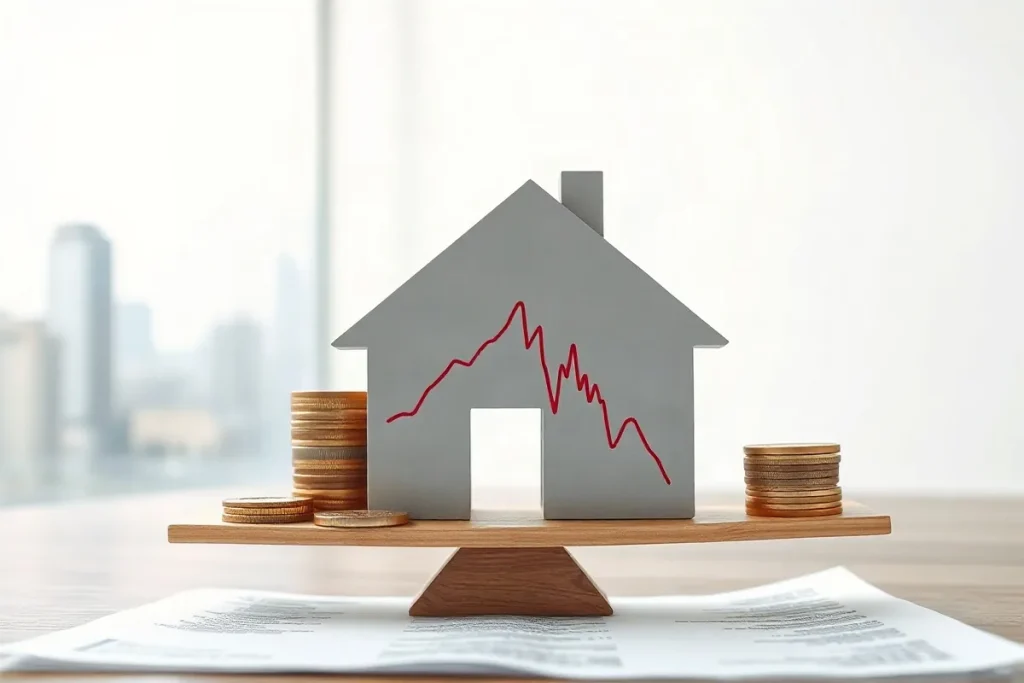
Property investments turn profitable when the purchase price, financing, rental income and resale value line up so the property can generate steady cash flow and long-term appreciation. Profit usually comes from buying well, managing costs tightly and holding long enough for the asset to grow in value.
The main topic here is not simply owning bricks and mortar; it is understanding how a property investment becomes a business decision. That means looking at the numbers behind the deal, the role of borrowing, and the timing of exit as carefully as the location itself.
This introduction sets up the wider question of where profitable property deals come from, and how lenders, market conditions and access to capital influence the outcome. For a broader context, see our overview «Money Center in Property & Mortgages: How Financial Hubs Shape Lending, Deals, and Access».
| Metric | What it shows | Best use |
|---|---|---|
| Cap rate | Income relative to purchase price | Comparing similar buildings |
| Cash-on-cash return | Income relative to cash invested | Deals with mortgages or deposits |
| Total return | Income plus capital growth | Long-term holding decisions |
| IRR | Timing of all cash flows | Renovation or sale-heavy deals |
How do you know a property investment is working?
Cash flow first
A property investment is working when the rent pays the main running costs and debt service without needing a monthly top-up from the owner. The practical test is simple: after vacancy, repairs, insurance, and taxes are built in, the deal should still stand on its own.
- Vacancy: the property should still cope if one month of rent is missed.
- Repairs: routine maintenance and occasional fixes must fit inside the rent.
- Insurance and taxes: these fixed bills should not push the property into negative cash flow.
- Debt service: mortgage payments should be covered by rental income, not personal savings.
Equity and return second
Equity growth can come from two places: mortgage paydown and price appreciation. That means a property can become more valuable even if rent stays flat, because the loan balance falls while the asset itself may rise in price.
Return metrics help compare one deal with another on the same basis. Cap rate, cash-on-cash return, and total return each show a different angle on performance, so a strong property is one that performs well on cash flow, builds equity over time, and still looks sound after all the costs are included.
What cash flow numbers matter most?
Gross rent versus net income
Gross rent is only the first number; net operating income matters more because it shows what is left after operating costs, before any mortgage is paid. A flat that brings in ₽80,000 a month can look strong until repairs, service charges, and property management fees are deducted.
- Gross rent: the full monthly rent, before costs.
- Net operating income: rent minus operating costs, but before debt.
- Vacancy allowance: one empty month in a 12-month period can quickly change the result.
Vacancy should be built into the model even in a strong tenant market, because one missed month can wipe out a large share of the annual margin. The same deal can also shrink fast if service charges or repairs are higher than expected.
Debt can erase the margin
Mortgage payments decide whether the cash flow stays positive, and a 30-year loan behaves very differently from a shorter-term loan with higher monthly repayments. A property that works on paper can fail in practice if the debt service is too heavy for the income left after costs.
- 30-year mortgage: lower monthly payments, slower principal reduction.
- Shorter-term loan: higher monthly payments, faster paydown.
- High fees: repairs, service charges, and property management can turn a promising deal negative.
The safest test is simple: compare rent, vacancy, operating costs, and debt payment in the same month. If the rent does not comfortably cover those four items, the investment may look profitable only until the first repair bill or empty unit arrives.
Which return metrics should investors compare?
Income-based measures
Investors should compare cap rate and cash-on-cash return first: cap rate measures net operating income against the purchase price, while cash-on-cash return measures the cash you actually put in after a deposit and mortgage. Use cap rate to compare similar buildings in the same market, and use cash-on-cash return when leverage changes the real amount of money at risk.
- Cap rate: best for two similar properties in one area, because it ties annual net operating income to the price paid.
- Cash-on-cash return: best when the buyer uses a loan, because the result depends on the deposit, not the full property price.
Longer-horizon measures
Total return is the better check for a multi-year hold because it combines rental income with capital growth instead of judging rent alone. Internal rate of return is useful when cash flows are uneven, such as during renovations or when a sale is planned after several years, because it helps compare money received at different times.
- Total return: includes income plus price growth, so it suits a 5-year or longer holding period better than rent yield alone.
- Internal rate of return: works well for deals with renovation costs, staged income, or a planned exit after several years.
When does leverage help, and when does it hurt?
Why debt boosts returns
Borrowing helps when a property earns enough rent to cover the mortgage and still leaves cash flow, while the asset value rises and refinancing becomes cheaper or easier. In that setup, the buyer controls a larger property with less cash upfront, so gains on the owner’s equity can grow faster than the property’s own price increase.
A higher loan-to-value ratio can magnify that effect in a rising market, because a smaller deposit is exposed to the same upside. The same logic also works differently under fixed-rate and variable-rate mortgages: a fixed rate gives more payment certainty, while a variable rate can improve or damage returns as borrowing costs move.
Why debt increases risk
Leverage turns dangerous when interest rates rise or vacancy reduces rental income, because the debt payment does not fall just because the property earns less. That means the owner can face a squeeze even if the asset has not lost much value on paper.
- High loan-to-value mortgage: stronger equity gains if prices rise, but less room to absorb a price drop.
- Fixed-rate loan: steadier payments, with less exposure to rate shocks.
- Variable-rate loan: potentially better if rates ease, but more vulnerable if they rise.
- Vacancy period: lower rent with the same debt bill, which can quickly weaken returns.
What can make a good-looking deal fail?
Hidden costs matter
A deal can look profitable on rent alone and still fail if the buyer overpays, since a strong headline yield cannot rescue a purchase price that already bakes in future growth. Legal fees, stamp duty, and broker fees also reduce the real return, while repairs, capital expenditure, and tenant turnover can push a positive projection into the red.
- Purchase price: paying too much at the start leaves less room for appreciation to do the work.
- Transaction costs: legal fees, stamp duty, and broker fees should be counted before comparing the property with other investments.
- Ongoing costs: repairs, capital expenditure, and vacancy between tenants can absorb cash that the spreadsheet did not expect.
Concentration risk matters too
A property that depends on one strong tenant, one district, or one short-term market trend is more fragile than it first appears. If that tenant leaves, that area cools, or that trend reverses, the rent and resale case can weaken quickly. A safer analysis asks what happens if the best-case assumption does not last.
How should an investor judge the deal before buying?
Stress-test the downside
Judge a property deal by whether it still covers debt when interest rates rise, occupancy falls, and rent growth slows; if the cash flow only works in a perfect market, the purchase is too fragile. A stronger deal keeps paying after a 1% to 2% rate shock, a vacancy increase, or a flat rent year.
- Interest rates: Rework the mortgage at a higher rate before you buy, not after.
- Occupancy: Test the budget with fewer rented days or a vacancy gap.
- Rent growth: Assume slower increases, or none at all, in the next lease cycle.
- Debt cover: Buy only if income still exceeds loan payments under stress.
Compare against alternatives
A property is more likely to be profitable when it beats other uses of the same capital, such as cash savings, bonds, or a lower-risk property with steadier income. That comparison matters because a deal that looks attractive on paper may still lose to a safer return after financing, maintenance, and vacancy are included.
Before committing, check the local market for vacancy levels, rent control rules, tax treatment, and financing conditions, because those terms can change the real return as much as the asking price. The best purchase is the one that works without assuming perfect occupancy, perfect rent growth, or perfect borrowing conditions.
Frequently asked questions
What is the quickest sign that a property is profitable?
Is cap rate enough to judge an investment?
Why can a leveraged property look better than an unleveraged one?
What costs do new investors miss most often?
Key takeaways
- Cash flow is the first test, not the last.
- Cap rate and cash-on-cash return measure different parts of the deal.
- Leverage can raise returns and raise risk at the same time.
- Hidden costs often decide whether a deal is truly profitable.
- Stress-testing is more useful than assuming perfect rent growth.
Topic guide: Analysis: The Complete Guide