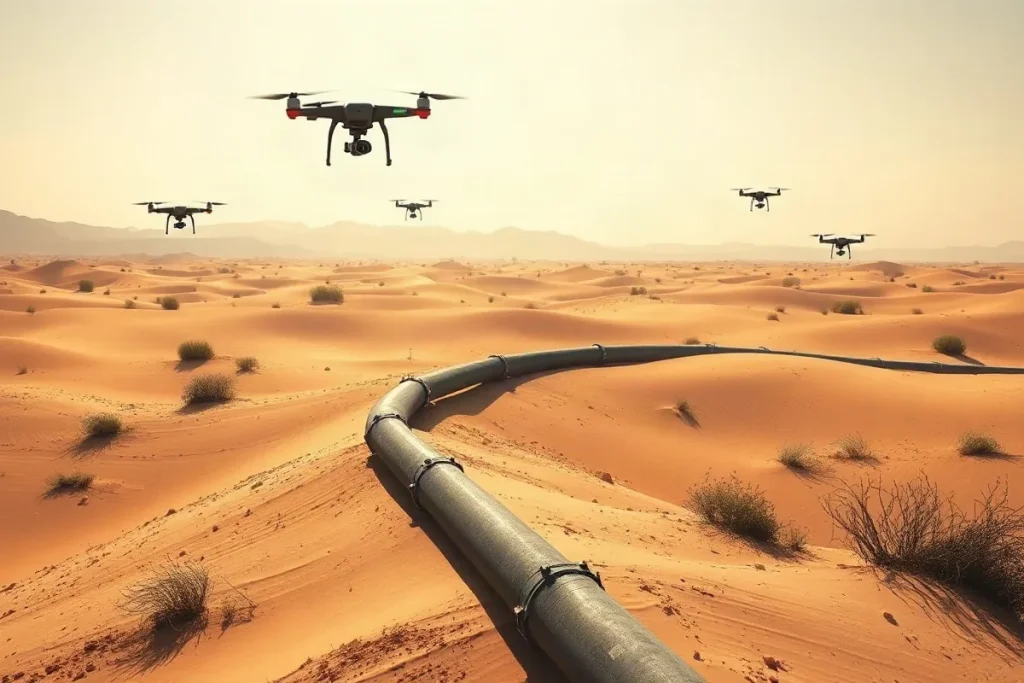
Saudi Arabia Halts East-West Pipeline Amid Drone Attacks
On September 10, 2026, Saudi Arabia suspended operations on its vital East-West crude oil pipeline after multiple drone strikes targeted pumping stations in the Riyadh and Medina regions. The pipeline, with a capacity of about 7 million barrels per day, is a critical artery for moving crude oil from eastern oil fields to export terminals on the Red Sea. The attacks caused fires and damage, forcing the Saudi government to deploy emergency teams to secure and assess the pipeline’s integrity.
The suspension marks a significant disruption to Saudi Arabia’s crude exports and has heightened concerns over the stability of global oil supply. The East-West pipeline is a strategic alternative route that bypasses the Strait of Hormuz, an area of geopolitical tension, thus its temporary shutdown reverberates throughout international energy markets.
Strategic Importance of the East-West Pipeline
The East-West pipeline, also known as Petroline, spans approximately 1,200 kilometers across Saudi Arabia, connecting oil fields in the Eastern Province to export facilities on the Red Sea coast. It usually transports up to 7 million barrels per day, supporting roughly 60% of Saudi Arabia’s total crude exports. This capacity helps the kingdom avoid the Persian Gulf shipping lanes, which have been threatened by regional conflicts and military tensions.
Saudi Aramco CEO Amin Nasser emphasized in August 2026 that the pipeline played a more crucial role in mitigating oil supply disruptions from Middle East conflicts than even the release of strategic petroleum reserves. Its suspension, therefore, not only disrupts Saudi exports but also raises risks of tighter global supply and higher oil prices.
Details and Impact of the Drone Attacks
The drone strikes originated from Iraqi territory, according to intelligence assessments confirmed in late June 2026, marking a new security challenge for Saudi Arabia. The attacks specifically targeted pumping stations, causing fires and injuring several personnel. The Saudi Energy Ministry responded swiftly by deploying operational and technical teams to contain damages and evaluate the pipeline’s safety.
In response, Riyadh chose to hold off on immediate military retaliation to allow the Iraqi government time to act against militants launching attacks from its soil. This diplomatic approach reflects the kingdom’s preference to manage regional security threats without escalating conflict, but also underscores the complexity of cross-border security enforcement in the region.
Wider Regional Security Context
The drone attacks come amid escalating assaults by Iran-aligned militant groups such as Yemen’s Houthi rebels, who recently launched strikes on Saudi energy and civilian infrastructure, injuring over 70 people. The Houthis declared a maritime embargo on Saudi Arabia in July 2026, attempting to blockade oil exports through the Bab el-Mandeb Strait, a critical chokepoint linking the Red Sea to global shipping routes.
This constellation of threats—from Iraq-based drone attacks to Yemeni missile strikes—has intensified instability in Saudi Arabia’s oil infrastructure, contributing to a surge in oil prices. In early September 2026, crude benchmarks surpassed $100 per barrel for the first time in months, closing the week up more than 8%, partly driven by market concerns over supply risks from these security incidents.
Potential Consequences for Global Oil Markets
The East-West pipeline shutdown threatens to reduce Saudi Arabia’s crude export capacity significantly in the short term, tightening supply amid already volatile market conditions. As one of the world’s largest oil producers, any interruption in Saudi output tends to ripple through global markets, affecting prices and energy security worldwide.
While Saudi Arabia has announced successful restoration of full pipeline operations shortly after the attacks, the incident highlights vulnerabilities in critical energy infrastructure. It may prompt increased investment in security measures and alternative transportation routes to safeguard supply chains against future disruptions.
Takeaway: Saudi Arabia’s temporary halt of the 7 million barrel-per-day East-West pipeline after drone attacks from Iraq underscores the growing risks to global oil supply stability amid escalating regional conflicts.
Sources
- PizzINT Intel — “Drone Attack Hits Saudi Arabia's East-West Oil Pipeline Pumping Station”
- saudipress.com — “Saudi Arabia Condemns Drone Attacks on Kuwait Border Posts – Saudi Press”
- gulfnews.com — “Saudi Arabia Restores Key Oil Facilities After Attacks, Fully Recovers East-West Pipeline Capacity and Stabilises Global Oil Supply”
- informat.ro — “Saudi Arabia: The East-West oil pipeline, known as Petroline, is operational again”
- The Jerusalem Post — “Drone attacks on Saudi Arabia from Iraq are a new threat”
