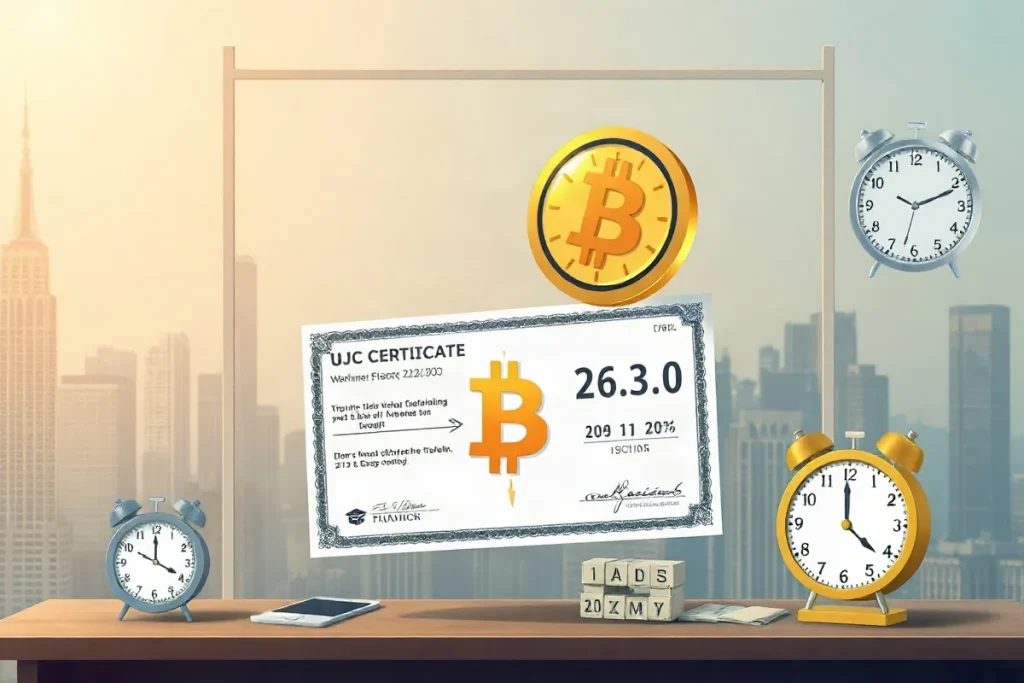
SEC Launches Innovation Exemption for Tokenized Stocks
On September 17, 2026, the U.S. Securities and Exchange Commission (SEC) issued an order establishing a five-year Innovation Exemption that authorizes certain regulated trading venues to issue tokenized representations of publicly traded U.S. stocks. This regulatory pathway is effective immediately and aims to facilitate innovation in securities trading by enabling tokenized stock offerings under defined safeguards.
The exemption sets conditions requiring token holders to retain the same rights as traditional equity holders, including dividend and voting rights, and grants companies the ability to object to their securities being tokenized. The move marks a significant regulatory milestone, following the Senate’s failure to pass the Clarity Act earlier in September 2026, which sought to clarify digital asset regulations.
Background and Market Context
Tokenization is the process of issuing digital tokens on blockchain networks that represent ownership of real-world assets such as stocks. This technology promises enhanced accessibility and liquidity by allowing fractional ownership and faster settlement times. Major fintech firms like Coinbase, Robinhood, Gemini, and Kraken have already launched tokenized equity products offshore but have yet to offer them to U.S. retail investors due to regulatory uncertainties.
The SEC’s Innovation Exemption is part of its broader Project Crypto initiative, launched in 2025, which aims to integrate blockchain technology with the U.S. capital markets. By permitting tokenized stock trading within a controlled framework, the SEC hopes to encourage responsible innovation while gathering data to inform future permanent rules for digital securities.
Key Conditions and Investor Protections
Under the Innovation Exemption, tokenized stocks must carry all shareholder rights equivalent to their traditional counterparts. This includes the right to dividends and the ability to vote on company matters, addressing concerns raised by issuers and investors alike. The exemption also requires trading platforms to notify companies 30 days before offering tokenized versions of their shares, giving issuers the opportunity to object and block such offerings.
To mitigate risks such as increased volatility and price swings common in less liquid markets, the SEC has imposed volume limits on tokenized stock trading. These safeguards are designed to protect investors while allowing markets to evolve. The SEC’s regulatory approach is deliberately interim, providing a flexible environment to observe developments before codifying permanent rules.
Industry and Issuer Reactions
Industry responses have been cautiously optimistic. Robinhood, which previously faced public criticism from AMC’s CEO Adam Aron over its tokenized stock model, announced plans to enhance its offering by enabling token holders to redeem tokens for underlying shares on a one-to-one basis and to grant voting rights. This demonstrates a commitment to aligning tokenized stock products with traditional shareholder expectations.
The SEC spokesperson indicated ongoing discussions with issuers have revealed growing acceptance of tokenization technology’s potential benefits, despite initial reservations. This suggests that tokenized stocks may become a mainstream feature of U.S. equity markets in the near future, especially as platforms adapt to meet regulatory and issuer demands.
Potential Impact on U.S. Capital Markets
The new regulatory framework paves the way for tokenized stocks to be traded nearly 24/7, a significant departure from traditional U.S. stock market hours, which typically run from 9:30 a.m. to 4 p.m. Eastern Time on business days. Continuous or extended trading could enhance liquidity and provide greater access for investors globally, particularly in blockchain-native financial ecosystems.
However, the SEC’s volume limits and issuer veto rights aim to balance innovation with market integrity. By enabling regulated tokenized stock trading with full shareholder rights, the SEC is positioning the U.S. markets to evolve with technological advances while maintaining investor protections and corporate governance standards.
Takeaway: The SEC’s Innovation Exemption formally authorizes tokenized U.S. stocks with shareholder rights, opening a regulated path toward near round-the-clock equity trading and blockchain integration.
