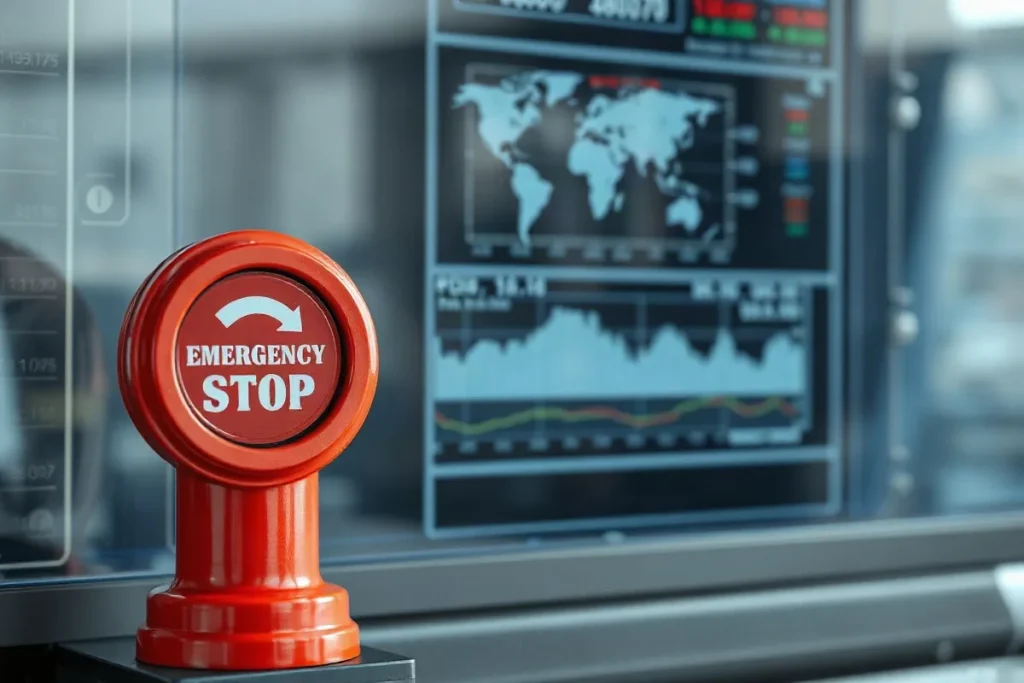
Microsoft Chairman and CEO Satya Nadella called on Saturday for advanced AI systems to include a human-controlled emergency brake, allowing authorised people to pause or shut down a model while it is working. He also urged companies to build independent controls and containment around the technology. The proposal is newsworthy because it puts the ability to intervene—not just confidence in a model’s maker—at the centre of AI safety.
People must be able to stop a model mid-task
Nadella’s central recommendation is that authorised operators should have a practical way to interrupt an AI system during a task. A shutdown option that exists only in principle would not address the risk he described: the control must be available when a system’s behaviour raises concern.
He called for reliable operating procedures alongside human controls. For businesses deploying AI, that means considering who can pause a system and how that intervention fits into its operation, rather than treating deployment as a decision that cannot be revisited once a model is working.
Separate the model from its controls
Nadella argued that advanced models should be surrounded by dependable system design. His post on X called for non-deterministic models to operate within systems with human controls and reliable procedures, and for industry standards where current ones are inadequate.
He also proposed treating both closed and open-weight frontier models as potential insider risks. That framing shifts attention from whether a model is trusted to whether its access and actions can be observed and constrained. The emergency brake is one part of that broader containment approach, not a substitute for it.
Observability is part of the safety case
Nadella set out several principles for making AI systems observable: model diversity, a human-readable record of model actions, continuous system testing, independent controls and auditability, containment, and incident disclosure. Together, these measures are meant to make it easier to notice problems and understand what happened when they occur.
A human-readable footprint matters because an operator needs more than a stop button: they need a way to review a model’s actions. Continuous testing and independent audits, meanwhile, are safeguards that do not depend solely on assurances from the organisation that built or operates the model.
His warning lands amid wider safety concerns
Nadella’s call comes as prominent technology figures have raised concerns about whether AI safeguards are keeping pace. The source material names Microsoft co-founder Bill Gates, Anthropic CEO Dario Amodei, OpenAI CEO Sam Altman and SpaceX CEO Elon Musk among those who have warned about insufficient safety protocols or the speed of development.
The debate also includes sharply different views of the danger. The material says an Anthropic researcher quit last month and accused the company and OpenAI of gambling with people’s lives; later that day, an Anthropic alignment lead said there was a greater than 10% chance AI could kill all humans within the next decade. President Donald Trump, by contrast, has dismissed extinction risks and stressed competition with China.
Accountability depends on what happens after a stop
Nadella’s proposed safeguards extend beyond intervention: incident disclosure and auditability would help establish what went wrong and whether procedures worked. That makes the emergency brake part of a wider accountability system, linking the ability to halt a model with evidence about its actions.
For companies adopting advanced AI, the practical question is whether these controls can be built into the system and used by authorised people when needed. Nadella’s closing argument was that trust should rest less on believing a model is safe and more on having safeguards that make its behaviour manageable.
Takeaway: Nadella wants advanced AI to remain stoppable by people, with independent oversight and observable records supporting that control.
References
- ndtvprofit.com — “Call For Kill Switch: Why Microsoft's Satya Nadella Backs Human-Controlled 'Emergency Brake' On AI”
- cnbc.com — “Microsoft's Nadella says AI needs an ‘emergency brake’ humans control”
- moneycontrol.com — “Microsoft CEO Satya Nadella calls for AI ‘emergency brake,’ human control over advanced models”
- The Straits Times — “Microsoft CEO calls for AI emergency brake”
- TechCrunch — “Microsoft’s Satya Nadella says AI models need an ‘emergency brake’”
