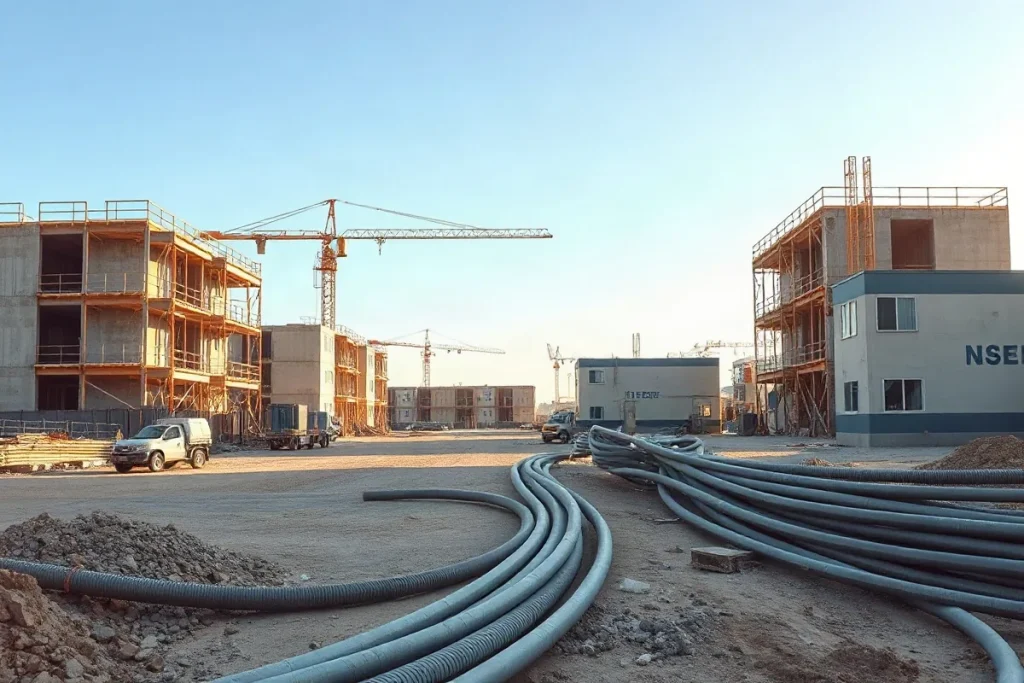
AI data-center construction is drawing skilled workers away from local building firms across the United States, tightening labor supplies and raising costs. In Abilene, Texas, homebuilders and contractors say they are struggling to keep electricians and other tradespeople as large projects offer substantially higher pay.
Data centers compete for a limited workforce
The construction industry needs to attract 349,000 net new workers in 2026 just to keep pace with demand, estimates Associated Builders and Contractors (ABC). The surge in data-center building adds pressure to an industry already seeking more workers, as technology companies race to bring facilities for artificial intelligence online.
That competition reaches beyond the data-center sites themselves. In Abilene, workers have arrived in large numbers to build major projects, prompting growth in RV parks and temporary housing. Local homebuilders, meanwhile, say data-center employers are taking skilled workers from the pool they rely on.
Gene Lantrip, an Abilene homebuilder, says the facilities are bringing business and new residents to the city. He is busier building houses, but says a smaller pool of available workers is contributing to higher costs and longer construction times.
Higher pay pulls electricians from local firms
Scotty Wristen, a master electrician who works with Lantrip, says some of his electricians have left for AI data-center jobs. Local commercial electrical companies have also lost workers, he said. Wristen described one company losing 42 workers in a day and said data-center employers pay at least triple what he can offer.
The projects are not confined to Abilene. Skilled workers have been moving to Texas since 2025 for facilities including the $500 billion Stargate Project for OpenAI, Oracle and Japan’s SoftBank. In rural Louisiana, Meta’s planned Hyperion data center is valued at more than $50 billion. Technology companies say these large facilities are needed to train and run powerful AI models.
Some employers are pairing recruitment with training. Meta, Google and Amazon are spending millions of dollars on programs that offer aspiring construction workers paid, hands-on experience at data-center sites. ABC is partnering with Meta on its $115 million American Workforce Academy. ABC vice president Joel Thames said the program has attracted thousands of people interested in learning a trade and eventually working in data centers.
Training adds workers, but local supply remains tight
Training programs may bring new people into construction, but the immediate competition is over workers already qualified for projects. In Abilene, the higher pay available at data centers makes it harder for local contractors to retain electricians. That affects more than the speed of data-center construction: it also puts pressure on the cost and timing of homes built for the newcomers.
The boom has produced a difficult trade-off for the town. Lantrip has more business because new residents need housing, while the reduced supply of workers makes that work more expensive and time-consuming. Temporary accommodation has expanded to house incoming construction crews, but that does not resolve the shortage facing local builders.
Future projects face political uncertainty
The next phase of construction is uncertain. Texas Democratic Gov.-elect Gina Hinojosa has called for a statewide moratorium on data centers until rules give residents more say over whether projects proceed. Potential restrictions could affect new developments, while developers with projects already under way may seek to finish them sooner.
Anita Verma-Lallian, chief executive of Arizona Land Consulting, which has projects in Texas and Arizona, said tighter limits could constrain supply and increase the push to complete existing projects. She also said uncertainty remains around future Texas developments and described Arizona as a more favorable environment for data-center construction.
If building slows in Texas, Verma-Lallian said, workers could move to other states or projects. Whether that happens—and whether training programs can expand the available workforce enough to ease pressure on local contractors—depends on the rules adopted and the pace of future construction.