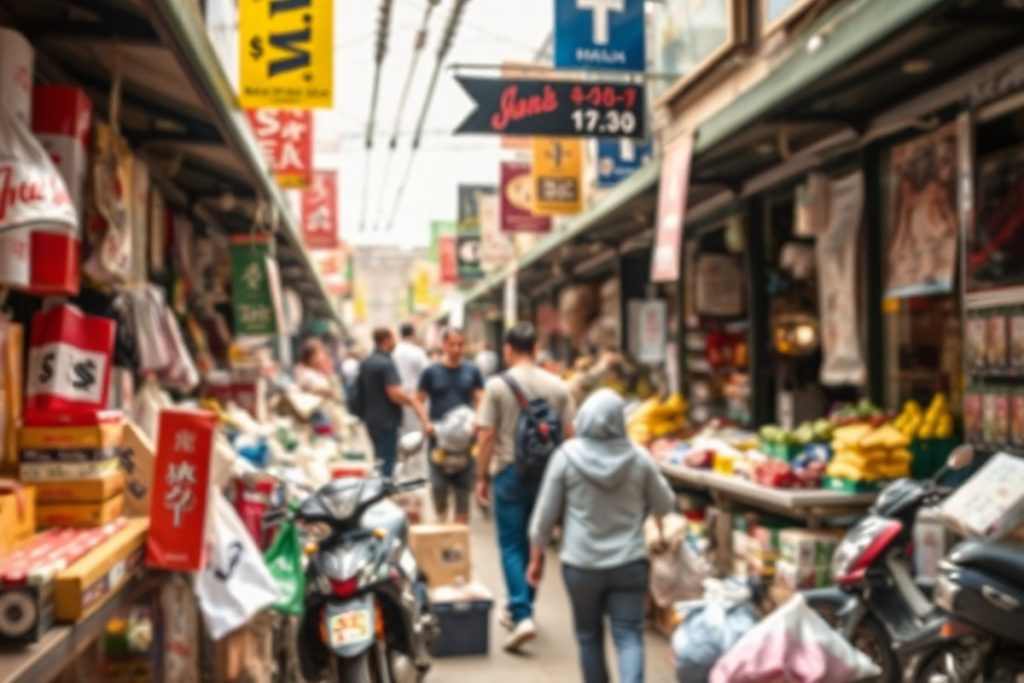
The Chinese government has rolled out a comprehensive new economic policy designed to stimulate domestic consumption amid a backdrop of slowing economic growth. This initiative, announced on August 15, 2026, seeks to enhance consumer spending power and address existing constraints that hinder consumption. By focusing on high-quality supply chains and innovative consumption models, the policy aims to reinvigorate economic activity and boost overall consumer welfare.
Context of Economic Slowdown
China’s economy has been facing significant challenges, with growth rates declining as the country navigates complex global economic conditions. The government has identified domestic consumption as a critical driver for future economic stability. In 2025, consumer spending growth slowed significantly, prompting the need for a robust policy response. By prioritizing consumer welfare in this new policy, the government hopes to create a more resilient economic environment.
This shift in focus marks a departure from previous strategies that heavily emphasized export-driven growth. The 15th Five-Year Plan, which is currently being formulated, will integrate these new priorities to ensure that domestic consumption becomes a cornerstone of economic recovery in 2026 and beyond.
Key Components of the Policy
The newly announced policy includes a range of measures aimed at boosting consumption, including increasing household income, reducing financial burdens, and innovative approaches to consumer engagement. The government’s action plan outlines 30 specific initiatives designed to enhance the quality of consumption across various sectors, from retail to services. This comprehensive approach is expected to create a virtuous cycle that stimulates demand and investment.
Another vital aspect of the policy is the emphasis on new technologies. By integrating advanced technologies into supply chains and consumer interactions, the government aims to create a more seamless and engaging shopping experience. This tech-driven approach is anticipated to resonate particularly well with younger consumers, who increasingly value convenience and innovation.
Stakeholders Involved
The implementation of this policy involves various stakeholders, including government agencies, local businesses, and consumers. Local governments will play a crucial role in executing the measures outlined in the action plan, which could lead to significant regional variations in how effectively the policy is implemented. For businesses, particularly in retail and services, adapting to this new focus on consumer welfare will be essential for survival and growth.
Moreover, consumer advocacy groups will likely play a significant role in monitoring the impact of these measures on households. Their feedback will be crucial as the government seeks to refine its approaches to ensure that the benefits of increased consumption are felt broadly across the population.
Projected Economic Impact
Economists are cautiously optimistic about the potential impact of this new policy on China’s economy. The government’s focus on domestic consumption is anticipated to counteract the current slowdown, with projections suggesting that consumer spending could rise significantly over the next few years. If effective, this could lead to a more balanced economic structure that relies less on exports and more on internal markets.
Moreover, enhancing consumer spending power is expected to have ripple effects throughout the economy, potentially benefiting sectors such as manufacturing and services. Increased demand for goods and services can lead to job creation, which in turn enhances consumer confidence and spending, fostering a cycle of growth.
Challenges Ahead
Despite the ambitious goals of this new policy, several challenges may hinder its success. Economic uncertainties, including global market fluctuations and domestic financial pressures, could impact consumer confidence and spending behaviors. Additionally, the effectiveness of the policy will largely depend on how well it is communicated and implemented across various regions in China.
Furthermore, there is the ongoing challenge of addressing income inequality, which may limit the extent to which all segments of the population benefit from these initiatives. The government will need to ensure that the policy promotes inclusive growth to achieve its intended outcomes.
In summary, China’s new economic policy, aimed at boosting domestic consumption, represents a significant shift in strategy as the country faces a slowing economy. By prioritizing consumer welfare and innovative models, the government hopes to create a more resilient economic landscape.
Sources
iiss.org, Rhodium Group, merics.org, interpret.csis.org, english.www.gov.cn