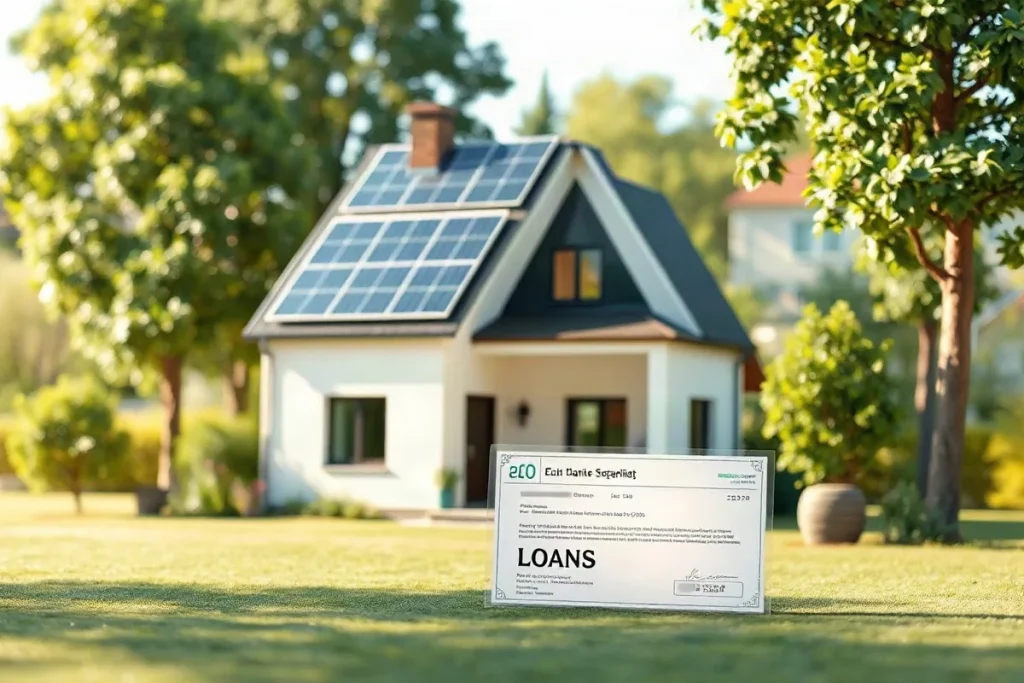
Introduction: Why Green Mortgages Matter in 2026
Green mortgages have emerged as a pivotal financial tool in 2026, designed to promote sustainable property ownership by rewarding eco-conscious homebuyers. These loans offer lower interest rates or better terms for properties meeting specific energy-efficiency standards, aligning homeownership with climate goals. As governments intensify carbon reduction commitments—such as the EU’s 55% emissions cut by 2030—green mortgages incentivize buyers to choose or upgrade energy-efficient homes, directly impacting the housing market and environmental footprint.
How Green Mortgages Work
At their core, green mortgages provide preferential lending conditions to borrowers purchasing or renovating homes that meet energy performance benchmarks. Typically, lenders require homes to achieve at least an Energy Performance Certificate (EPC) rating of B or higher in the UK, or comply with the U.S. Department of Energy’s Zero Energy Ready Home standards.
Eligibility Criteria and Loan Features
- Energy Efficiency Thresholds: Minimum EPC B rating or equivalent.
- Loan Discount Rates: Interest rates 0.1% to 0.5% lower than conventional mortgages.
- Loan Amount Caps: Often capped at 80% loan-to-value (LTV), with some lenders offering up to 90% for certified green homes.
- Use of Funds: For new purchases or green renovations including insulation, solar panels, or heat pumps.
For example, Santander’s Green Mortgage in the UK offers a 0.25% interest rate reduction for homes with EPC ratings of B or higher and permits up to 90% LTV. Meanwhile, in the U.S., Wells Fargo’s Green Mortgage program requires compliance with the Energy Star certification and offers up to $100,000 for energy-efficient upgrades.
Benefits for Eco-Conscious Buyers
Green mortgages provide tangible financial and environmental advantages, making sustainable homeownership more accessible and rewarding.
Financial Savings and Environmental Impact
- Lower Monthly Payments: Interest rate reductions translate to hundreds of dollars saved annually. For example, a 0.3% rate cut on a $300,000 loan saves approximately $900 per year.
- Energy Cost Reductions: Certified green homes typically reduce energy bills by 20% to 40%, depending on upgrades like solar panels or efficient HVAC systems.
- Increased Property Value: Studies show homes with EPC ratings A or B sell 5% to 10% above the market average.
These benefits combine to lower the total cost of ownership while supporting climate goals. Homebuyers who invest $15,000 in energy improvements through a green mortgage can see payback periods as short as 7 years due to savings and incentives.
Impact on the Housing Market and Sustainability
Green mortgages are influencing broader market dynamics by shifting demand toward sustainable properties and encouraging retrofits of existing homes.
Market Trends and Regulatory Drivers
Data from the UK Green Finance Institute shows a 25% annual increase in green mortgage originations between 2023 and 2025, with over £3 billion issued in 2025 alone. In the U.S., green mortgage-backed securities are gaining traction, with issuances surpassing $10 billion in 2025.
- Government Incentives: The Inflation Reduction Act of 2022 in the U.S. expanded tax credits for energy-efficient home improvements, complementing green mortgage offerings.
- Regulatory Pressure: The EU’s Sustainable Finance Disclosure Regulation (SFDR) requires lenders to report sustainability impacts, pushing more banks to develop green mortgage products.
These trends signal a shift where sustainability is not just a niche but a core driver of property valuation and lending practices.
Leading Green Mortgage Products in 2026
Several lenders have launched competitive green mortgage products in 2026, each with unique features tailored to different markets.
| Product | Minimum Energy Rating | Interest Rate Discount | Max Loan-to-Value | Eligible Upgrades | Region |
|---|---|---|---|---|---|
| Santander Green Mortgage | EPC B | 0.25% | 90% | Solar, insulation, heat pumps | UK |
| Wells Fargo Green Home Loan | Energy Star | 0.3% | 85% | Energy Star appliances, solar | USA |
| Deutsche Bank Green Mortgage | Passivhaus Standard | 0.2% | 80% | Passive design, triple glazing | Germany |
| Commonwealth Bank Sustainability Loan | 6-Star NatHERS Rating | 0.35% | 90% | Energy efficiency, solar | Australia |
Challenges and Considerations
Despite their promise, green mortgages face hurdles that buyers and lenders must navigate carefully.
Barriers to Adoption
- Verification Complexity: Accurately assessing and certifying energy performance can add weeks to loan processing times.
- Limited Awareness: As of 2025, only 18% of U.S. homebuyers reported knowing about green mortgage options.
- Higher Upfront Costs: Energy-efficient homes or renovations often require $10,000 to $30,000 more upfront, which not all buyers can afford despite longer-term savings.
Addressing these challenges requires coordinated policy, lender incentives, and consumer education to maximize green mortgage uptake.
Frequently asked questions
What qualifies a home for a green mortgage?
Are green mortgages more expensive upfront?
Can I use a green mortgage to renovate an existing home?
Do green mortgages affect property resale value?
Key takeaways
- Green mortgages offer interest rate discounts of 0.1% to 0.5% for energy-efficient homes.
- Certified green homes reduce energy bills by 20% to 40%, improving affordability.
- Government policies like the EU’s SFDR and US tax credits bolster green mortgage growth.
- Leading products in 2026 include Santander Green Mortgage (UK) and Wells Fargo Green Home Loan (US).
- Challenges include certification complexity and upfront costs but benefits outweigh barriers long term.
Conclusion
Green mortgages are transforming the property market in 2026 by linking financial incentives with environmental responsibility. They provide a compelling pathway for buyers to reduce their carbon footprint, lower housing costs, and increase property value. As regulatory frameworks tighten and awareness grows, green mortgages will become mainstream tools that accelerate sustainable homeownership globally. For eco-conscious buyers, these products represent a smart investment in both their finances and the planet’s future.
Topic guide: Analysis: The Complete Guide