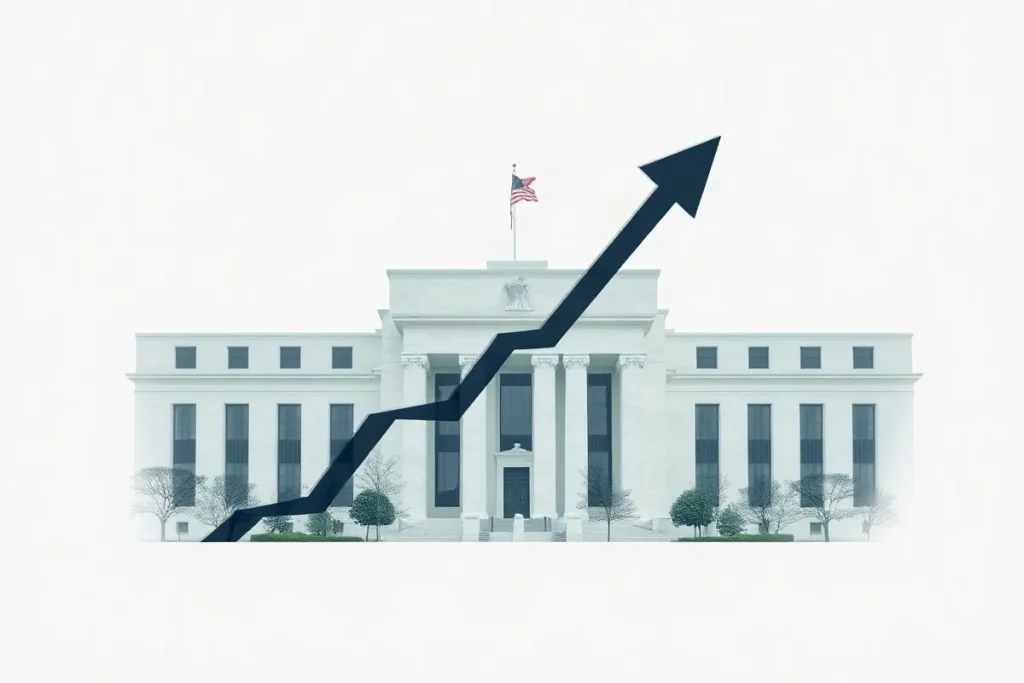
Fed Approves First Rate Hike Since 2023
On Wednesday, the Federal Reserve’s Federal Open Market Committee (FOMC) voted unanimously to increase the key interest rate by 25 basis points, bringing the target range to 3.75%-4%. This marked the first rate increase since July 2023 and signaled a shift in policy aimed at reining in persistent inflation.
The unanimous 12-0 vote reflected heightened concerns over elevated inflation levels driven partly by rising oil prices and geopolitical tensions. The Fed’s statement emphasized a commitment to achieving its 2% inflation target, highlighting that inflation remains ‘‘too high for too long.’’
Inflation and Economic Context Behind the Move
Inflation pressures have persisted despite earlier expectations of a slowdown, with the Fed’s updated 2026 projections raising the personal consumption expenditures price index forecast to 3.7%, up 0.1 percentage point from June. Core inflation, excluding food and energy, is now expected at 3.4% for the year.
Chairman Kevin Warsh cited strong labor market conditions and ongoing inflation above target as key reasons for the hike. The Fed also factored in geopolitical instability in the Middle East, which has contributed to higher energy costs and inflationary risks spreading throughout the economy.
Outlook for Future Rate Increases
The Fed’s dot plot projections revealed that 16 of 18 committee members anticipate at least one more rate hike within 2026, with some expecting two additional increases. No rate hikes are projected beyond 2026, but officials foresee rate cuts beginning in 2028 and continuing into 2029.
This outlook reflects a balance between containing inflation and supporting economic growth. The unemployment rate forecast was lowered to 4.1%, down 0.2 percentage point from June, underscoring the Fed’s confidence in the labor market despite tighter monetary policy.
Market Reactions and Borrowing Costs
Following the announcement, Treasury yields initially fell, indicating investor optimism about the Fed’s inflation-fighting resolve. However, yields on the 10-year note have climbed about one percentage point since February, while the 2-year note has experienced sharper gains, reflecting expectations of higher short-term rates.
Mortgage rates have also risen notably, with the 30-year fixed mortgage hitting 7.19%, up over a full percentage point compared to a year ago. These higher borrowing costs could weigh on housing and consumer spending in the near term.
Significance and Implications for the Economy
Fed officials appear determined to avoid repeating past missteps when inflation surged unexpectedly. Their decision to raise rates despite economic uncertainty signals a more assertive stance reminiscent of past anti-inflation campaigns.
Analysts suggest this marks a potential turning point toward ‘‘Volckerian decisiveness,’’ prioritizing inflation control over concerns about short-term growth. The Fed’s firm approach aims to anchor inflation expectations and prevent a prolonged inflationary cycle that could destabilize the economy.
Takeaway: The Federal Reserve’s rate hike and clear signal of more increases this year underscore a decisive shift to tackle stubborn inflation amid strong economic conditions.
