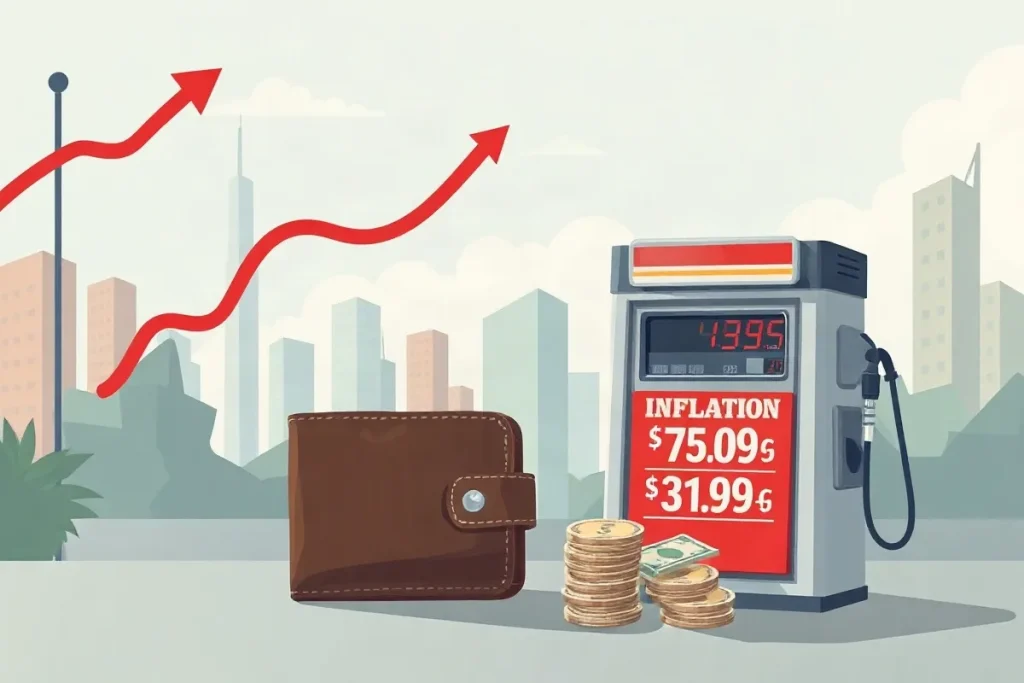
Inflation Outpaces Wage Growth in August 2026
In August 2026, the consumer price index (CPI) increased by 3.4% compared to the previous year, remaining steady from July’s figure. This inflation rate exceeded wage growth, as inflation-adjusted average hourly earnings actually declined by 0.3%, signaling a reduction in real income for workers. The persistence of this gap heightens financial pressure on households, eroding their purchasing power amid rising costs.
The unemployment rate held firm at 4.1%, supported by an unexpected addition of 162,000 jobs in August, far surpassing the anticipated 53,000, according to the Bureau of Labor Statistics. Despite a strong labor market, the inability of wages to keep up with inflation suggests that consumer spending could face constraints, impacting broader economic growth.
Energy Price Shocks Drive Inflation Higher
Escalating tensions in the Middle East, particularly the ongoing conflict involving Iran, have disrupted critical oil trade routes such as the Strait of Hormuz and the Strait of Bab el Mandeb. These disruptions caused global oil prices to rise above $100 per barrel in early September, the highest since May 2026. Consequently, gasoline prices surged nearly 4% in August and are up more than 27% year-over-year, reaching around $4.30 per gallon.
More concerning is the rise in diesel prices, which hit a record $6 per gallon. Diesel is vital for transporting goods and agricultural production, so its cost push is likely to cascade through supply chains, inflating prices of food and other consumer goods. Jet fuel prices have also increased, raising airline ticket costs by almost 3% in August and over 23% annually, adding to overall inflationary pressures.
Wage Gains Fail to Match Rising Costs
While nominal wages have seen solid increases, they lag behind inflation, diminishing workers’ real earnings. The Federal Reserve’s Monetary Policy Report in July 2026 noted that despite wage growth, inflation, particularly the 4.1% rise in Personal Consumption Expenditures prices through May, outstripped gains. This imbalance means the average consumer is effectively experiencing a pay cut when adjusted for higher living expenses.
This wage-inflation gap complicates the Federal Reserve’s policy decisions. With inflation remaining stubbornly above the 2% target for over five years and real wages declining, the Fed faces pressure to raise interest rates to temper inflation without severely impacting employment. The August data heightens expectations for a rate hike in the coming Federal Reserve meeting, though the precise trajectory of rates remains uncertain.
Additional Inflation Drivers: AI and Tariffs
Beyond energy, technological and trade factors contribute to inflationary trends. The expanding use of artificial intelligence has increased demand for specialized computer chips, which are also essential in consumer electronics like laptops and gaming consoles. Companies such as Apple and Microsoft have raised prices on MacBooks, iPads, and Xbox consoles citing higher memory and storage costs driven by chip scarcity.
Tariffs enacted during the previous U.S. administration continue to influence prices, although their impact is waning. The Supreme Court struck down a key tariff policy in February 2026, easing some cost pressures, but alternative legal measures are being pursued to maintain import taxes on certain goods. These factors collectively sustain upward pressure on consumer prices in addition to energy-related shocks.
Economic Outlook and Consumer Impact
The combination of persistently high inflation, rising energy costs, and wage stagnation poses significant challenges for American households. With real wages declining and essential costs such as food, fuel, and airfare rising sharply, consumers face tighter budgets. This environment could lead to restrained spending, potentially slowing economic growth in the near term.
Policymakers, including the Federal Reserve, must balance curbing inflation with sustaining employment levels. The ongoing geopolitical uncertainty, particularly the extended Middle East conflict now beyond six months, adds risk to the inflation outlook. How these factors evolve will influence the trajectory of interest rates and the broader economic recovery in the months ahead.
Takeaway: August 2026 inflation remained elevated at 3.4%, outstripping wage growth and intensifying cost pressures on U.S. households amid rising energy prices and supply chain challenges.
Sources
- GoldPrice.com — “August Payroll Surge: 162,000 Jobs Added – Implications for Consumer Spending & Fed Policy”
- July 2026 — “Monetary Policy Report”
- virginiabusiness.com — “US consumer prices accelerate in August, push Fed closer to rate hike”
- siepr.stanford.edu — “The U.S. economy in 2026: What to watch for”
- go.geographicsolutions.com — “Economist Corner”
